
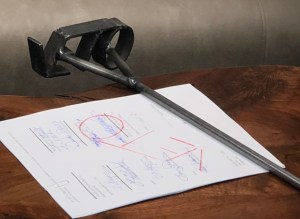
Governor Kristi Noem announced today that she has signed the state budget bills, the last remaining bills before her for consideration from the 99th Legislative Session this year. The announcement also notes that the Governor did not veto any legislation this year. That makes the 2024 session the first in nearly seventy years without any gubernatorial vetoes.
Only two other times in South Dakota has a legislative session ended without at least one veto. The first was in 1933. Governor Tom Berry had taken office after winning amidst the Great Depression and the Democratic landslide of 1932. Franklin D. Roosevelt was elected President, Democrats won many state offices in South Dakota for the first time in state history, and Democrats also won control of both houses of the State Legislature for the first time.
The second time was in 1955, the first session for newly-elected Governor Joe Foss, a Republican and heroic World War II naval aviator. Foss enjoyed supermajority Republican control in both houses, although many other Republican governors in South Dakota history did as well and nevertheless always issued at least one veto each session.
This means that the State Legislature’s “Veto Day,” scheduled for Monday, March 25, will in fact not include the consideration of any vetoes. The Legislature traditionally concludes its work in early or mid-March, but because the governor is given two weeks to review bills, a day is traditionally scheduled in late March to consider any vetoes.
The last time a Veto Day happened with no vetoes was ten years ago, in 2014. That year, Governor Dennis Daugaard only vetoed one bill, Senate Bill 98, but that veto was issued and considered during the main run of the legislative session.
Even though there are no vetoes to consider, the Legislature still has to convene on Monday to adjourn sine die, officially closing the 99th legislative session. A quorum of both houses is necessary to convene. In 2014, this final day of session convened on March 31 on 10 AM and adjourned at 10:17 AM. In the Senate, 24 of 35 members were present; in the House, only 39 of 70 were present, barely more than the 36 necessary for a quorum.
(Thank you to Anna Madsen at the Legislative Research Council for directing me to the report that compiles data on past vetoes, and which spared me from having to pour over every old legislative journal. You can find that in this document, beginning on page 34.)
 SoDak Governors