
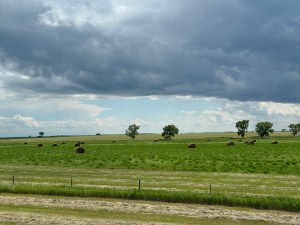
Lyman County, South Dakota has never been large. In the 2020 census, the West River county had 3,718 people, or about 0.4% of the state’s population. The county’s population peaked in 1910, when it had 10,848 people, or 1.9% of the state population. It has lost population in every census, save one, ever since.
Twenty-two South Dakota counties, one-third of the state’s sixty-six, have never been home to a Governor, Lt. Governor, U.S. Senator, or U.S. Representative (they are listed at the bottom of the post). It is remarkable, then, that Lyman County has produced at least eight citizens who have been elected to high elected office, including a Governor, a U.S. Senator, three Congressmen, three Lt. Governors, and two Attorneys General, not to mention the longest serving constitutional officer in the state’s history. And, it is the only county to be the home to the Governor and Lt. Governor at the same time – the small town of Kennebec was home to both Governor M. Q. Sharpe and Lt. Governor A. C. Miller in 1943-45.
Herb Sundall wrote about this “Lyman County Mafia” for the Dakota Conference at Augustana University in 2013. Sundall himself was a longtime friend and attorney for U.S. Senator Jim Abdnor, a Lyman County native. He credits the influence of Abdnor, and before him of M. Q. Sharpe and A. C. Miller, in fostering a culture of political involvement. It also can’t hurt that Lyman County is conveniently located, just a short drive from the State Capitol in Pierre and midway between Sioux Falls and Rapid City.
In addition to the elected officials featured below, Sundall pointed to a number of other Lyman County residents who went on to high-profile government or political positions. In addition to Sundall himself, these include Frank Brost (an Adbnor confidante before serving as Chief of Staff for Governors George S. Mickelson and Walter Dale Miller), SD GOP Chairman Bob Burns, Federal District Judge John Jones, Circuit Judge Pat McKeever, U.S. Attorney Phil Hogan, Keith Moore (a staffer to U.S. Senator Mike Rounds), and Roland Dolly, who was the commissioner of the Governor’s Office of Economic Development and died in the April 19, 1993 plane crash with Governor Mickelson. The county also produced the Woster brothers – Jim, Terry, and Kevin – all of whom have been prominent in news and media, as well as longtime South Dakota journalist Noel Hamiel.
Below is a brief look at the state elected officials from Lyman County:
William Williamson – U.S. House, 1921-33
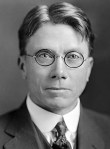
Williamson was born in Iowa in 1875 and moved with his parents as a child to Aurora County. He got his law degree from the University of South Dakota. Williamson established a law practice in Oacoma, where he founded a newspaper and served as Lyman County state’s attorney and as a county judge. From 1921 to 1933, Williamson represented South Dakota’s 3rd congressional district, which constituted West River, as a Republican. In 1932, South Dakota lost its third district, and Williamson didn’t seek reelection. He established a law practice in Rapid City and lived in Custer, where he died in 1972, having lived to be 96.
M. Q. Sharpe – Governor, 1943-47; Attorney General, 1929-33
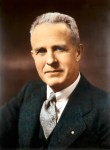
Sharpe was born in Marysville, Kansas in 1888. He came to South Dakota to attend law school at USD, graduating in 1914, and established a law practice in Kennebec and Oacoma, where his mother had homesteaded. Sharpe built a lucrative practice, attracting clients from throughout the state, and he became known as a “lawyer’s lawyer” who aided young lawyers in entering the practice of law. Sharpe also served as Lyman County State’s Attorney.
Sharpe was elected attorney general in 1928 and, although he took on high-profile cases of political corruption, he lost reelection amidst the FDR Democratic landslide in 1932. In 1937, Sharpe chaired the Supreme Court Statute Codification Commission, which led to the first codification of South Dakota state laws in 1939.
In 1942, Sharpe sought the Republican nomination for governor as an outsider against a trio of officials who had served in the Bushfield administration. Sharpe finished second in the Republican primary, but because no candidate won 35% of the vote, the nomination was made by the State Republican Convention, where Sharpe prevailed after the “statehouse trio” failed to unite behind a single candidate.
Governor Sharpe had served as Governor Bushfield’s delegate to the Missouri River States Committee, and as governor himself he chaired the committee. In that role, he played a leading role in negotiating the Pick-Sloan Plan, which led to the authorization of the Missouri River dams. Governor Sharpe also led civil defense and rationing efforts during World War II and created a state veterans department. After the war ended, he initiated an aggressive post-war building and development plan, founding the state park system, building a state office building, revitalizing the teacher pension fund, and creating the state police radio system. Sharpe also supported repeal of the state income tax.
In 1946, Sharpe sought an unprecedented third term as governor, but lost in the Republican primary to Attorney General George T. Mickelson. He returned to his Lyman County practice, and chaired Governor Herseth’s citizen tax study commission in 1959. Sharpe died of a heart attack at his home in Kennebec in 1962. Today, the capital city of Pierre is on the shores of Lake Sharpe, which was created by the Big Bend Dam and named in Governor Sharpe’s honor.
A. C. Miller – Attorney General, 1961-63; Lt. Governor, 1941-45
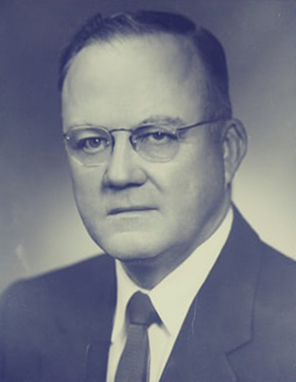
Miller was a Kennebec attorney; his law office was across the street from that of M. Q. Sharpe. Miller served in the State House from 1933-40, where he was Speaker of the House from 1937-40. In 1940, he was elected lieutenant governor, serving during the final two years of Governor Harlan Bushfield’s administration from 1941-43.
In 1942, Miller opted not to run for governor, clearing the way for fellow Kennebec attorney M. Q. Sharpe to run. Miller, instead, sought a second term as lieutenant governor. Although the Republican Party at this time generally sought regional balance between the nominees for governor and lieutenant governor, Miller’s incumbency won out, leading to the only time in state history when the governor and lieutenant governor were from the same town, from 1943-45.
Miller ran for U.S. Senate in 1944, unsuccessfully challenging incumbent Senator Chan Gurney in the Republican primary. He was elected attorney general in 1960, serving from 1961-63. In 1962, Miller once again challenge a U.S. Senator of his own party, running unsuccessfully in the Republican primary against Senator Francis Case. When Case died shortly after the primary, Miller ran at a special Republican convention for the nomination, but was defeated by Lt. Governor Joe Bottom.
John F. Lindley – Lt. Governor, 1959-61
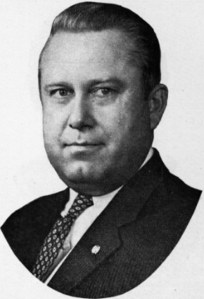
Lindley was a native of Reliance, a veteran of the U.S. Army, and a graduate of the USD School of Law. His law office was in Chamberlain (across the Missouri River in Brule County) and served on term in the State House, in 1951-52.
Unusually for this list, Lindley was a Democrat. He ran for lieutenant governor in 1956, losing to incumbent Roy Hauck as the Democratic gubernatorial nominee, Ralph Herseth, lost to incumbent Joe Foss. in 1958, Herseth and Lindley were both elected, amidst a property tax revolt and dissatisfaction with Eisenhower-era farm policies. The Democratic ticket lost reelection in 1960, with Herseth losing to Archie Gubbrud and Lindley losing to Joe Bottum.
Lindley ran for governor in 1964, losing narrowly to Republican Nils Boe. Boe won the election with 51.7% to 48.3% for Lindley; South Dakota would not again have a comparably close gubernatorial election until 1986 (Mickelson by 3.6%) and 2018 (Noem by 3.4%).
Lindley died in 1971.
Alma Larson – Secretary of State, 1965-73
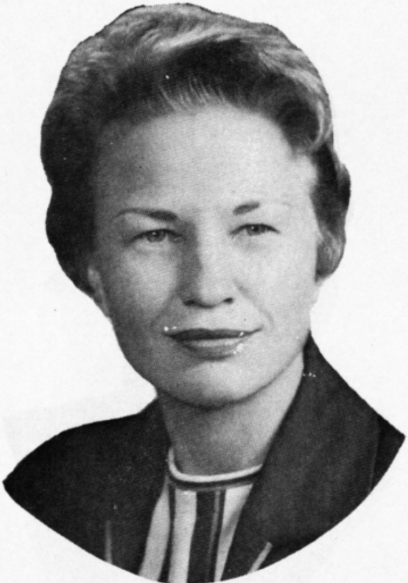
Alma Larson was born on a farm north of Vivian. An active Republican, she worked in state government in the 1950s, rising to become Deputy Secretary of State during the service of Secretary of State Essie Wiedenman from 1961-65. Larson ran to succeed Wiedenman in 1964. She was elected to a two-year term and reelected three times, serving eight years from 1965-73.
Just six years later, Larson’s nephew, Vern Larson, followed her into statewide office (see below). She lived a long life and remained active in Republican politics, dying at the age of 80 in 2012.
Jim Abdnor – U.S. Senate, 1981-87; U.S. House, 1973-81; Lt. Governor, 1969-71
Abdnor, the son of Lebanese immigrants, was born in Kennebec. He began his career in elected office when he was elected to the State Senate from Lyman County in 1956. He spent twelve years in the Senate, until 1969, including eight years as Senate Appropriations Chair and two years, from 1965-66, as President Pro Tempore of the Senate. In 1968, Abdnor was elected lieutenant governor, during the era when the office was elected separately from the governor, and he served alongside Governor Frank Farrar.
In 1970, Abdnor ran for U.S. House from the Second District, losing the Republican primary to Frank Brady, who lost to Democrat Jim Abourezk. Two years later, Abourezk ran for U.S. Senate, and Abdnor was elected to the open U.S. House seat. He held that seat until 1980, when he successfully challenged incumbent U.S. Senator George McGovern. Six years later though, Abdnor’s electoral career ended when, after having surviving a primary challenge from Governor Bill Janklow, he was defeated by Democratic Congressman Tom Daschle. Abdnor accepted an appointment from President Ronald Reagan to serve as administrator of the Small Business Administration, and then retired in 1989. He died in 2012. Abdnor was a beloved figure because of his decency and love for people, and although a lifelong bachelor, he left a large cadre of loyal former staffers, most prominently U.S. Senator John Thune (from neighboring Jones County).
Clint Roberts – U.S. House, 1981-83
Roberts was born in Presho and ranched in Lyman County. He served in the State Senate from 1973-78, including stints as assistant minority leader in 1975-76 and as President Pro Tempore in 1977-78.
In 1978, Roberts ran for governor, losing the Republican primary to Attorney General Bill Janklow. Janklow, who was elected that fall, appointed Roberts as Secretary of Agriculture.
In 1980, Roberts was elected to the U.S. House from the Second District; he succeeded fellow Lyman County resident Jim Abdnor, who was elected that year to the U.S. Senate. Two years later, though, South Dakota lost its second House seat, and Roberts was defeated by First District Congressman Tom Daschle for the new at-large seat.
Roberts ran for Governor again 1986. Although the early frontrunner for the Republican nomination, he lost the primary to George S. Mickelson. Once again, Roberts’ one-time opponent asked him to join the administration, as Roberts served as director of the State Energy Office for Mickelson.
The Roberts family legacy in state government continues to this day. Roberts’ daughter-in-law, Pam Roberts, served several governors in roles including commissioner of personnel, chief of operations, and secretary of labor, as well as a term as chair of the SD Republican Party. She currently serves on the SD Board of Regents. Hunter Roberts, the son of Pam and grandson of Clint, currently serves as Secretary of Agriculture and Natural Resources. The Roberts continue to ranch in Lyman and Stanley counties.
Vern Larson – Commissioner of School and Public Lands, 2013-15; State Treasurer, 2003-11; State Auditor, 1979-2003
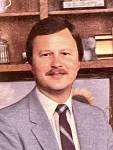
Vern Larson is the longest-serving constitutional officer in South Dakota history. A native of Vivian, and the nephew of Alma Larson, he was first elected state auditor in 1978, serving six terms over twenty-four years. The passage of term limits precluded Larson from running for state auditor in 2002, so he instead ran for state treasurer, serving two terms from 2003-11. Larson retired after thirty-two years in elected office in 2011. In 2013, though, Governor Dennis Daugaard asked him to return after Commissioner of School and Public Lands Jarrod Johnson retired; Larson served for just under two years and, though he did not seek reelection, he extended his record of service to nearly thirty-four years.
In addition to those listed, Lyman County was at one time the home of E. Y. Berry, who was an attorney in Kennebec before settling in McLaughin, from whence he was elected to the U. S. House in 1950, launching a twenty-year career in Congress. U.S. Senator John Thune, another protege of Jim Abdnor, is from Murdo, eighteen miles west of the county line in neighboring Jones County.
These are the twenty-two South Dakota counties that have never been home to a U.S. Senator, U.S. Representative, Governor, or Lt. Governor. Ten of these twenty-two counties have larger populations that Lyman County, as of the 2020 Census: Aurora, Bennett, Buffalo, Campbell, Deuel, Dewey, Douglas, Edmunds, Grant, Gregory, Hanson, Harding, Hutchinson, Hyde, Jackson, Kingsbury, Oglala Lakota, Perkins, Roberts, Sully, Todd, and Ziebach.
 SoDak Governors