
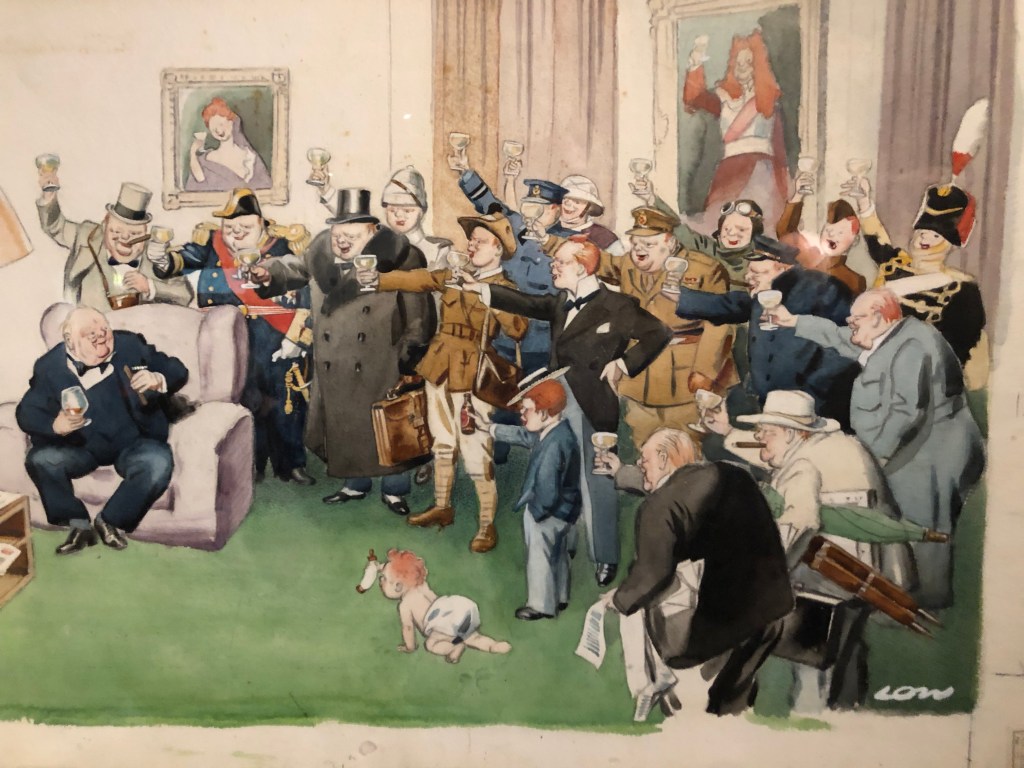
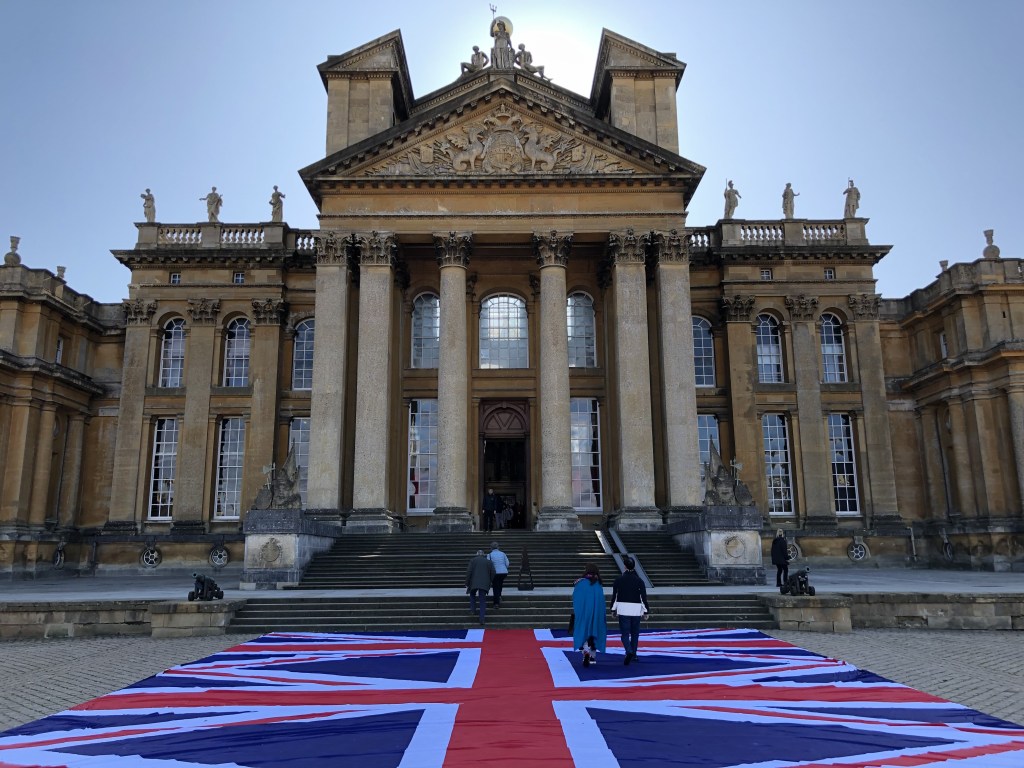
Today is the 150th anniversary of Sir Winston Churchill’s birth. Winston Leonard Spencer-Churchill was born on November 30, 1874 at Blenheim Palace, the home of his grandfather, the 7th Duke of Marlborough. Blenheim Palace had been a gift from Queen Anne to the 1st Duke of Marlborough, John Churchill, who was a British general in the War of Spanish Succession, which curbed the dominance of King Louis XIV of France. His military brilliance was said to be unrivaled in Europe until the rise of Napoleon. It is an oddity of British History that the Churchill family would produce nation’s preeminent leaders in two world wars, centuries apart.
Fortunately for history, Winston Churchill’s father, Lord Randolph Churchill, was the second son of the 7th Duke. Had Randolph been the first son, he and Winston would have succeeded to the Dukedom, cutting short Winston’s political career.
Winston Churchill’s mother, Jennie Jerome Churchill, was an American solicialite. Churchill today is seen as the consummate Englishman, but he was half American. Churchill made light of his American heritage when he was invited to address the U.S. Congress in late December 1941: “Had my father been American and my mother British, instead of the other way ’round, I might have got here on my own!”
Churchill was 65 years old when he finally achieved his lifelong ambition to be Prime Minister in May 1940. By that time he had served in the House of Commons for nearly 40 years; he first entered the House in 1900, and with the exception of a two year gap, would serve until 1964. His career prior to 1940 had been his characteristic combination of brilliance and failure, a consequence of his willingness to take bold risks. Chief among these failures was his advocacy for the failed Dardanelles Campaign, a 1915 attempt to open a new theatre during the First World War with an attack on present-day Turkey. The failure was not entirely his fault, but it would be used against him by his opponents for the next 25 years.
During the 1930s, Churchill had the cruel fate of a Cassandra. With foresight and eloquence, he repeatedly warned his countrymen about the evil of Hitler and the dangers posed by Naziism. Although he was not entirely alone during his “wilderness years,” Churchill’s failures and eccentricities, such as the Dardanelles Campaign and his defense of Edward VIII during the abdication crisis, made him easy to ignore.
All of that changed in September 1939, when Hitler invaded Poland, discrediting Prime Minister Neville Chamberlain’s promise of “peace in our time” and proving that Churchill had been right about Hitler all along. Hitler soon conquered Poland, and then France, and began his air onslaught against Britain. It took eight months for Churchill’s colleagues to turn to him, advising George VI to invite Churchill to be prime minister.
One has to wonder if his colleagues believed the prime ministership to be a poisoned chalice, as Churchill took office during the darkest days of the War. He soon made it clear that, just as he had never wavered in identifying the Nazi threat, he would never back down now that he was empowered to face it. He soon delivered a series of war speeches that are singular in the history of the English language. In his first speech as prime minister, he promised that “I have nothing to offer but blood, toil, tears and sweat,” then continued:
You ask, what is our policy? I can say: It is to wage war, by sea, land and air, with all our might and with all the strength that God can give us; to wage war against a monstrous tyranny, never surpassed in the dark, lamentable catalogue of human crime. That is our policy. You ask, what is our aim? I can answer in one word: It is victory, victory at all costs, victory in spite of all terror, victory, however long and hard the road may be; for without victory, there is no survival. Let that be realised; no survival for the British Empire, no survival for all that the British Empire has stood for, no survival for the urge and impulse of the ages, that mankind will move forward towards its goal.
In a private speech to his parliamentary colleagues a couple of weeks later, he was more direct: “If this long island story of ours is to end, let it end only when each of us lies choking in his own blood upon the ground.”
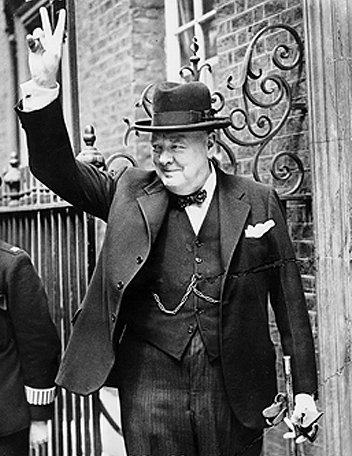
Churchill’s deep knowledge of history, and his unique eloquence as a writer, gave his speeches a sense of gravity that could not be matched. His countrymen, hearing him speak, no longer felt a victim of chaos; they were part of an inevitable sweep of history:
We shall go on to the end. We shall fight in France, we shall fight on the seas and oceans, we shall fight with growing confidence and growing strength in the air, we shall defend our island, whatever the cost may be. We shall fight on the beaches, we shall fight on the landing grounds, we shall fight in the fields and in the streets, we shall fight in the hills; we shall never surrender. And even if, which I do not for a moment believe, this island or a large part of it were subjugated and starving, then our Empire beyond the seas, armed and guarded by the British Fleet, would carry on the struggle, until, in God’s good time, the New World, with all its power and might, steps forth to the rescue and the liberation of the Old.
And Churchill imbued them with a new sense of determination: “Let us therefore brace ourselves to our duties, and so bear ourselves that, if the British Empire and its Commonwealth last for a thousand years, men will still say, ‘This was their finest hour.'”
Churchill never won the Nobel Peace Prize, to his great frustration, but he was awarded the Nobel Prize in Literature, recognizing not only his own historical writing but the power of his speeches. He accepted membership in the Order of the Garter at the insistence of Elizabeth II, but refused to accept a place in the House of Lords; supposedly, Queen Elizabeth was prepared to make him “Duke of London,” a title that no other Englishman has ever held. President John F. Kennedy, an admirer as a World War II veteran, made Churchill an honorary citizen of the United States, solidifying the bond between Churchill and his mother’s homeland.
Churchill’s leadership brought Britain through the dark days of 1940 and 1941 and then, after America entered the War, he and Roosevelt led the allies to ultimate victory. In a cruel twist, his party narrowly lost the general election of 1945, casting Churchill from office during the Potsdam Conference that was planning for a post-war world. It was perhaps a fortuitous loss; it was left to Churchill’s Labour Party counterpart, Clement Attlee, to sort out the economic and social struggles of post-war Britain.
Churchill, as leader of the opposition but also the world’s leading statesman, was freed from the burdens of office. He was able to complete his masterful history, The Second World War – he famously (and perhaps apocryphally) said that, “History will be kind to me, for I intend to write it.” More significantly, he was free to, once again, speak his mind about the evils facing the world. Speaking at Westminster College in Fulton, Missouri in 1946, Churchill was among the first to recognize the realities of the new Cold War against the Soviet Union: “From Stettin in the Baltic, to Trieste in the Adriatic, an iron curtain has descended across the continent.” Those words are remembered today; what is less remembered is that, once again the Cassandra, Churchill’s words upset both the Truman administration and the Attlee government, both of whom still naively hoped for warmer relations with Stalin.
Once again, Churchill was proven correct. His career is the outstanding exemplar of the value of persistence and of moral clarity.
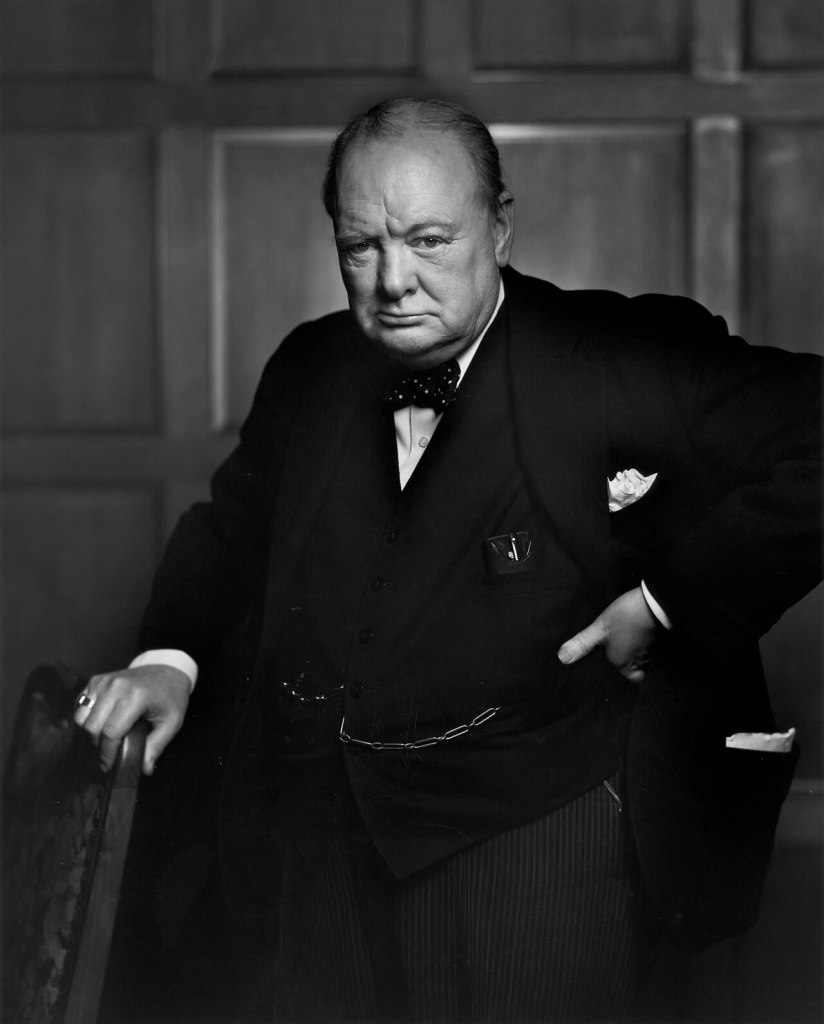
Churchill valued history, perhaps more than any other political leader. When a Nazi bomb destroyed the House of Commons in 1941, Churchill insisted that it be built back exactly as it had been, even thought the chamber was too small to hold all of its members at once. Churchill felt that the crowded nature of a full house, with members standing in the aisles, added to the excitement of an important moment.
Churchill also had a genius for political imagery that is under-appreciated today. Modern eyes see Churchill and consider him to be a typical Englishman of his era, but he was not. He had learned from his father, who as Chancellor of the Exchequer wore a large, walrus-like mustache, of the importance of creating a memorable image. Churchill’s “V for Victory” was obviously an inspiring symbol, but his polka-dot ties and big cigars were not typical in his day; they were deliberately chosen to make him distinctive. This was also true of his many hats and clothes; most famously the bowler hat, but also the many uniforms and outfits he loved to wear. He also played up his resemblance to the “British Bulldog.”
I also appreciate Churchill as an outstanding example of the value of generalists, rather than experts, in high political office. As Churchill once said, “Nothing would be more fatal than for the Government of States to get in the hands of experts. Expert knowledge is limited knowledge, and the unlimited ignorance of the plain man who knows where it hurts is a safer guide than any rigorous direction of a specialized character.”
During his years of brilliant war leadership, Churchill talked constantly to experts, on any manner of topics. He was an expert on none of them; he was an expert on European History, and probably on whiskey. He was a smart man who knew his country well, and he was able to listen to experts, weigh their opinions, and then make the best decisions that he could.
Finally, there are an endless number of outstanding Churchill stories, some of them true, others that are too good to check. Perhaps the most famous is his exchange with Lady Astor, who accused him of being drunk: “Yes, madam, I am,” he replied, “and you are ugly. But tomorrow I will be sober.”
There are innumerable books about Churchill. Famous among them are The Last Lion, a three-volume biography by William Manchester. Churchill’s official biographer, Sir Martin Gilbert, completed an eight-volume biography that had been begun by Churchill’s son, Randolph; he also wrote a one-volume biography. My favorite is the one-volume biography by Andrew Roberts, Churchill: Walking with Destiny. The title comes from Churchill’s thoughts when he finally became prime minister: “I felt as if I were walking with destiny, and that all my past life had been but a preparation for this hour and for this trial.”
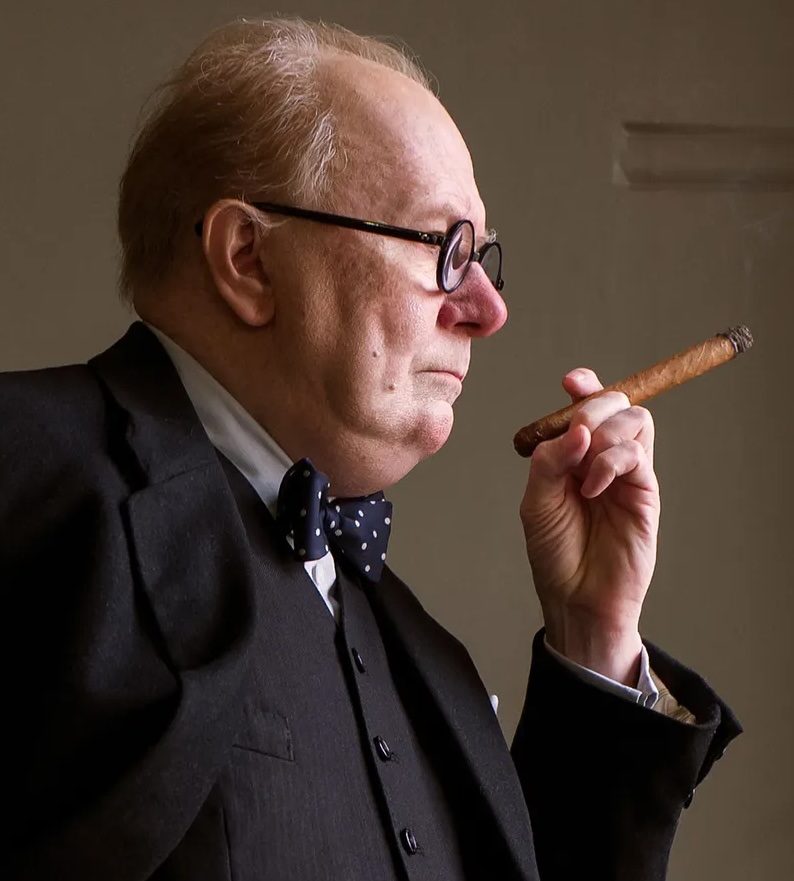
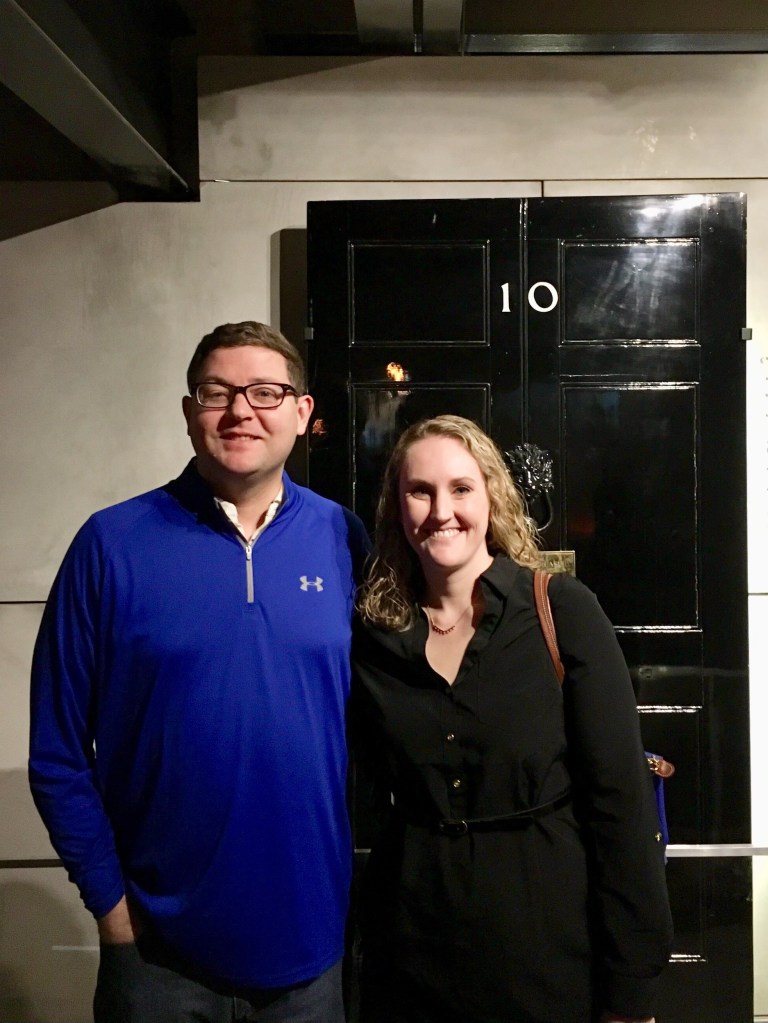
Churchill is also frequently portrayed on the large and small screen; sometimes well, sometimes as a caricature. The best is Gary Oldman’s Academy Awarding-winning portrayal in Darkest Hour, which tells the story of the early days of the War. I also enjoy John Lithgow’s portrayal in The Crown; the first season of the Netflix series about Elizabeth II includes several excellent storylines about Churchill’s return to Number 10 Downing Street in the early 1950s.
Netflix also released an excellent four-part documentary on Churchill to commemorate his 150th birthday. Entitled Churchill at War, it includes numerous historians, colorized archival video and audio, reenactment, and even an AI-generated Churchill voice reading his writings.
And then there are Churchill’s writings. He was a masterful historian and well-deserving of his Nobel Prize for this work, as well as his wartime speeches. The aforementioned The Second World War covers the most famous period of his life. Two other works recount wars in which he played a personal role: The World Crisis, his six-volume history of the First World War; and The River War, about the conquest of Sudan. Two of his books are biographies of his ancestors: Marlborough, a masterful four-volume biography of the 1st Duke; and Lord Randolph Churchill, about his father. I also enjoyed his final work, the four-volume History of English-Speaking Peoples.
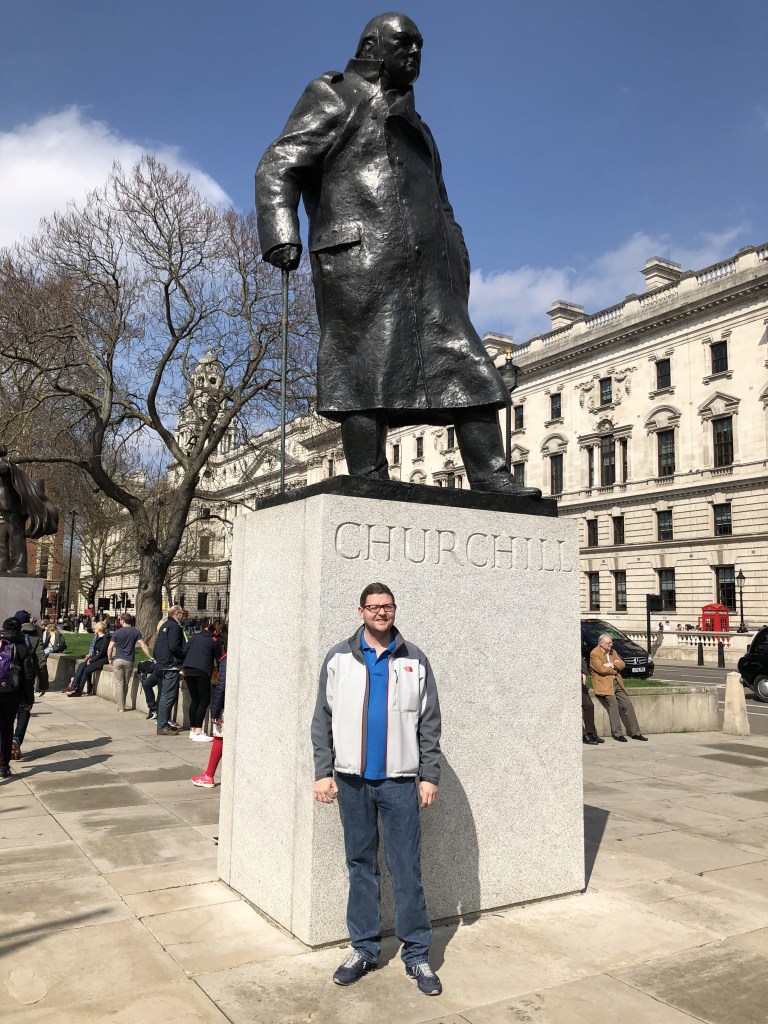
For the visitor to Britain, there are many great Churchill sites. The best is the Churchill War Rooms, the remarkably preserved underground basements and tunnels from which Churchill conducted much of the War. Also outstanding is Chartwell, Churchill’s country home, where visitors can see his personal library, art studio, and gardens. Blenheim Palace, still the home of the Dukes of Marlborough, is also excellent. Churchill is also closely associated with many sites in London: The Palace of Westminster, where he served in the House of Commons; Westminster Abbey, where he is memorialized by a stone inside the door; and St. Paul’s Cathedral, the site of his funeral where he is memorialized by a gate in the crypt. Churchill was offered the opportunity to be laid to rest in Westminster Abbey, or in St. Paul’s alongside Admiral Nelson and the Duke of Wellington. Instead, he chose his family plot at the humble St. Martin’s Church in Bladon, near Blenheim Palace.
Our world today owes much to Churchill. His clarion calls protected Western Civilization against the twin evils of Nazi fascism and Soviet communism, and his leadership set the direction of world history from the following eight decades. As we seem to be entering a new historical epoch, we would do well to remember what made Churchill great: his mastery of the English language, his commitment to history, his persistence, and his moral clarity.
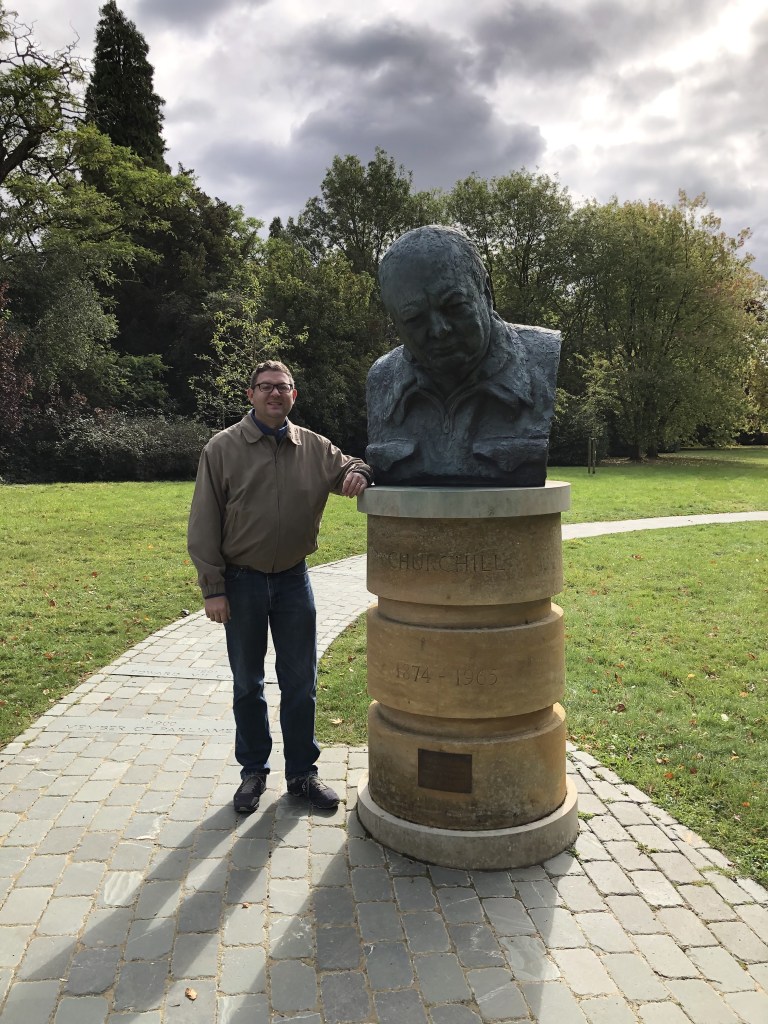
Below are photos I have taken at various sites of significance to Churchill.




 SoDak Governors