
Posted here are county-by-county maps showing the results of every gubernatorial election since 1889. All data is taken from the SD Secretary of State’s election history page.
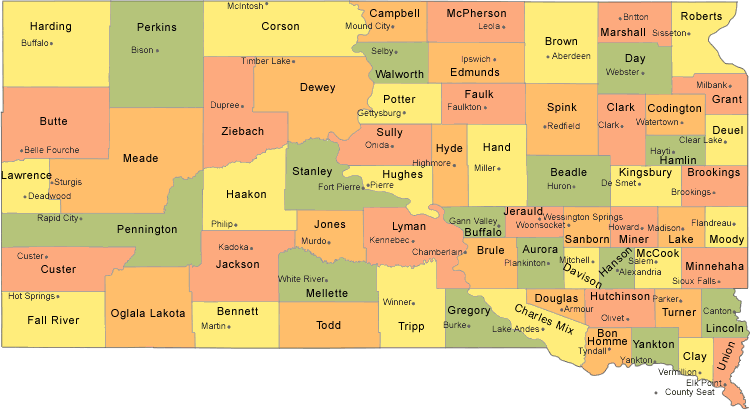
For reference, I have included a map labeled with county names at the bottom. Note that Oglala Lakota county was known as Shannon County prior to 2015. These maps reflect shifting county lines over time, particularly early in statehood. In some cases, more than one county reported results together; these cases are represented by a gray, rather than black, border or a gray line connecting non-contiguous counties. There were also a few areas early in statehood that were not in any county; these are shaded in gray.
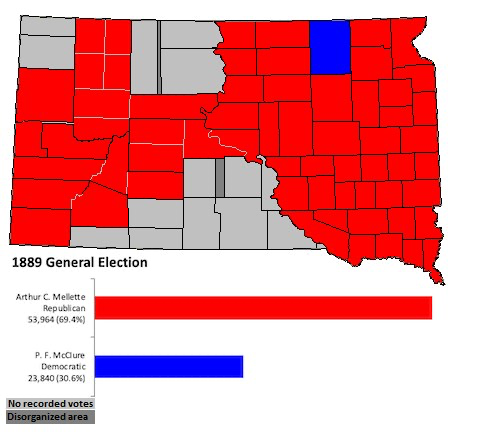
- Arthur C. Mellette was the final governor of Dakota Territory. A native of Indiana, he had come to Dakota Territory as a land agent, and established a prosperous law practice in Watertown, where he was a prominent statehood activist.
- P. F. McClure was a mayor of Pierre and territorial commissioner of immigration, and a merchant and banker.
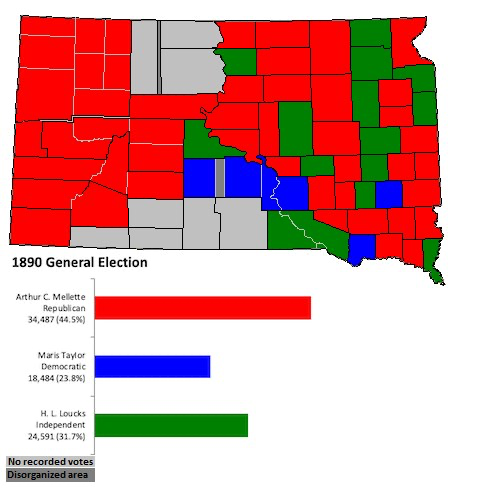
- Arthur C. Mellette was the incumbent governor, seeking a second term. Running in a three-candidate field, Mellette’s 44.5% is the lowest percentage of the vote by a winning candidate for governor in state history.
- Maris Taylor was a Huron banker and state representative.
- Henry L. Loucks was a Deuel County farmer, Farmers Alliance leader, and publisher of Dakota Ruralist. He was the candidate of the “Independent Party,” a populist party that had formed in response to agrarian discontent with farm relief efforts and soon became part of the national Populist Party.
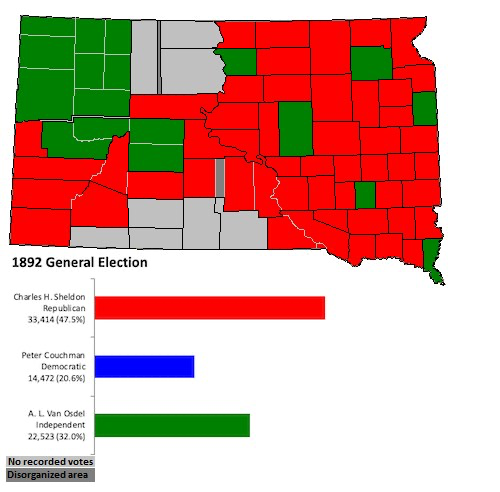
- Charles H. Sheldon was a Day County farmer and former territorial legislator, and a popular platform speaker for Republican candidates.
- Peter Couchman was a Walworth County attorney and farmer. He had been the 1890 nominee for lieutenant governor and was a former New York State assemblyman.
- Abraham L. Van Osdel was a Yankton farmer and former territorial legislator who had been the nominee of the populist “Independent Party” for lieutenant governor in 1890. He sought the gubernatorial nomination in 1892 after the 1890 nominee, Henry L. Loucks, declined to run, and the party decided against joining a “fusion ticket” with Democrats.

- Charles H. Sheldon was the incumbent governor, running for reelection.
- James A. Ward was a Pierre attorney, chairman of the Democratic state central committee, and a former territorial auditor.
- Isaac Howe was Redfield attorney and Spink County judge. He was the candidate of the populist “Independent Party.”
- M. D. Alexander was a Watertown prohibition advocate.

- Andrew E. Lee was a Populist and a Vermillion merchant and former mayor. He was the nominee of the “People’s Party,” a fusion ticket supported by the Populist Party, the Democratic Party, a “Free Silver” Republicans allied with U.S. Senator Richard F. Pettigrew. Lee’s victory of 319 votes or 0.4% was the closest margin for a gubernatorial candidate in South Dakota history.
- Amund O. Ringsrud was the secretary of state and an Elk Point merchant.
- John F. Hanson was a resident of Mount Vernon.

- Andrew E. Lee was the incumbent governor, seeking reelection on a “fusion” ticket backed by the Populist and Democratic parties. His winning margin of 390 votes was the second-closest in a gubernatorial campaign in state history, eclipsed only by his win two years earlier.
- Kirk G. Phillips was state treasurer and a Deadwood pharmacist.
- Knute Lewis was a Lake Preston merchant; he ran against as the Prohibition nominee in 1906 and 1908.
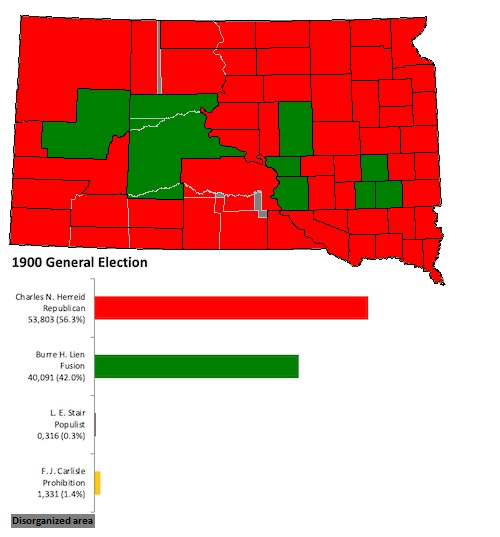
- Charles N. Herreid was a Eureka lawyer and farmer. A former lieutenant governor, he had served on the Board of Regents and as chairman of the South Dakota Republican Party.
- Burre H. Lien was the mayor of Sioux Falls and chairman of the Board of Charities and Corrections, and a farmer and educator. He was backed by a “fusion” ticket of Populist and Democrats, in the last time the two parties would back a joint ticket.
- L. E. Stair was a Mitchell resident, nominated by a faction of Populists who refused to back the fusion ticket.
- F. J. Carlisle was a Brookings County resident.
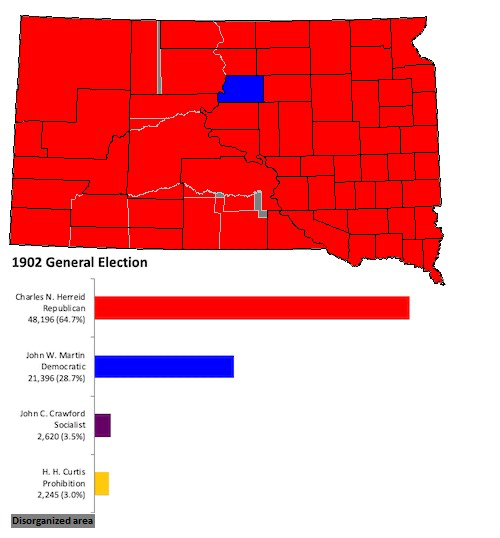
- Charles N. Herreid was the incumbent governor, seeking a second term.
- John W. Martin was a banker and the former mayor of Watertown. The Populist Party declined to nominate a candidate and backed the Democratic ticket.
- John C. Crawford was a Clark County resident.
- H. H. Curtis was a Castlewood resident.

- Samuel H. Elrod was a Clark attorney; he had been a delegate to the constitutional convention of 1883. His 68.3% of the vote and margin of 42.6% are both the largest percentage in state history by a non-incumbent candidate for governor.
- Louis Napoleon Crill was an Elk Point banker and former state senator and president pro tempore. He was once again the Democratic nominee for governor in 1922.
- Freeman T. Knowles was a Deadwood attorney and newspaper publisher, and had served one term in the U.S. House as a Populist. He ran for governor again in 1908.
- W. J. Edgar was a Brookings resident.
- R. C. Warne was a Davison County resident and was nominated by a faction of Populists who refused to join the Democratic Party.
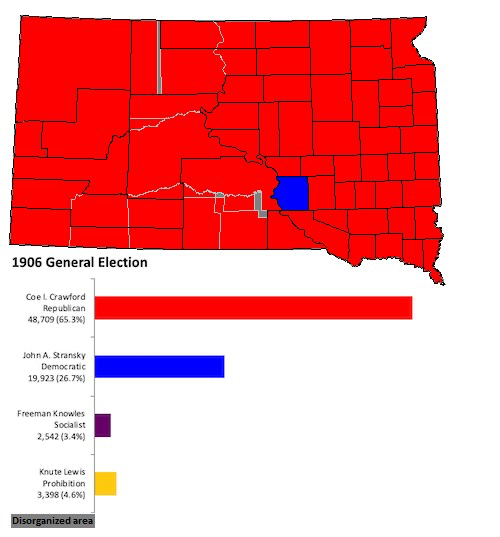
- Coe Crawford was a Huron attorney and former state senator and attorney general. A progressive, Crawford had sought the Republican nomination in 1904, losing to Samuel H. Elrod, but he bested Elrod in a rematch in 1906.
- John A. Stransky was a Pukwana businessman and former state representative.
- Knute Lewis was a Lake Preston merchant; he had been the Prohibition Party’s nominee in 1898 and would be again in 1918.
- Freeman T. Knowles was a Deadwood attorney and newspaper publisher, and had served one term in the U.S. House as a Populist. He had also run for governor in 1906.
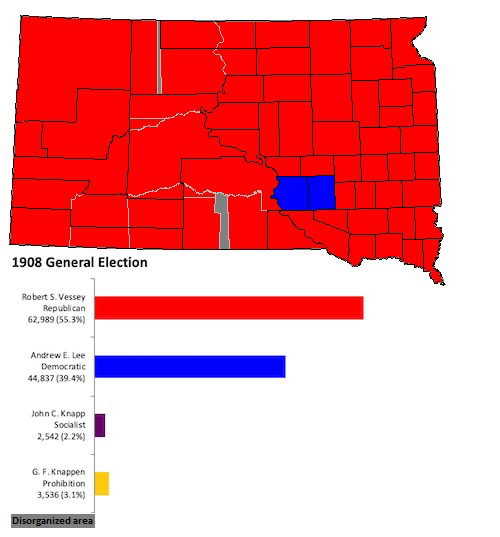
- Robert S. Vessey was a Wessington Springs merchant and farmer, and a state senator who served as president pro tempore.
- Andrew E. Lee had served as governor as a Populist from 1897-1901 and sought a return to the office as a Democrat.
- G. F. Knappen was a Brookings banker.
- John C. Knapp was a Sisseton resident; he ran again in 1914.

- Robert S. Vessey was the incumbent governor, seeking reelection.
- Chauncey L. Wood was the mayor of Rapid City and an attorney.
- M. G. Opsahl was a Sioux Falls resident and Socialist Party member.
- O. W. Butterfield was a Miller clergyman; he ran again in 1912.
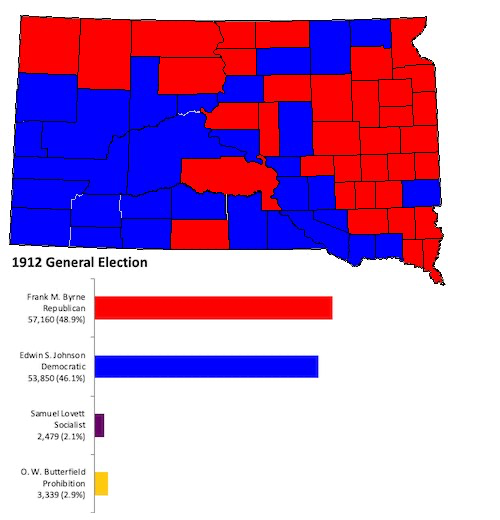
- Frank M. Byrne was the lieutenant governor and a Faulkton farmer and businessman. He had served as a state senator and was appropriations chair and president pro tempore.
- Edwin S. Johnson was a banker, businessman, and attorney from Platte and formerly from Armour. Following his loss, he won the state’s first direct election for U.S. Senate in 1914, making him the first South Dakota Democrat to win a statewide office.
- Samuel Lovett was a Sioux Falls businessman.
- O. W. Butterfield was a Miller clergyman; he had also run in 1910.
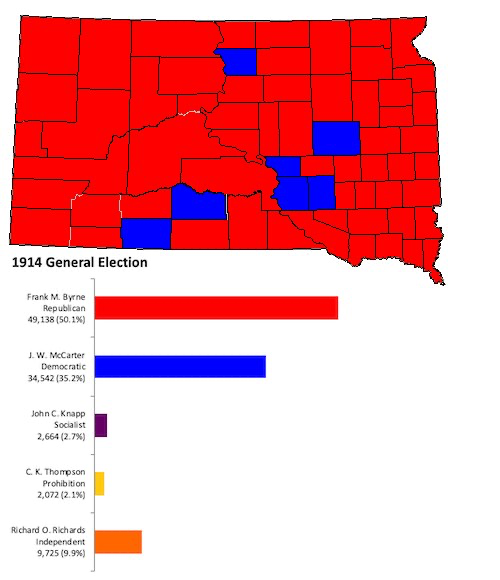
- Frank M. Byrne was the incumbent governor, seeking a second term.
- James W. McCarter was an Edmunds County judge.
- John C. Knapp was the mayor of Sisseton; he had run previously in 1908.
- C. K. Thompson was a Spink County resident; he ran again in 1916.
- Richard O. Richards was a Huron businessman and banker, and one of South Dakota’s wealthiest citizens. He was an early proponent of primary elections and became a candidate himself when he felt that other progressives had failed to fully carry out his views. After losing in 1914, he sought the Republican gubernatorial nomination in 1916 and 1920, ran again as an independent in 1924, and sought the Democratic nomination in 1926.
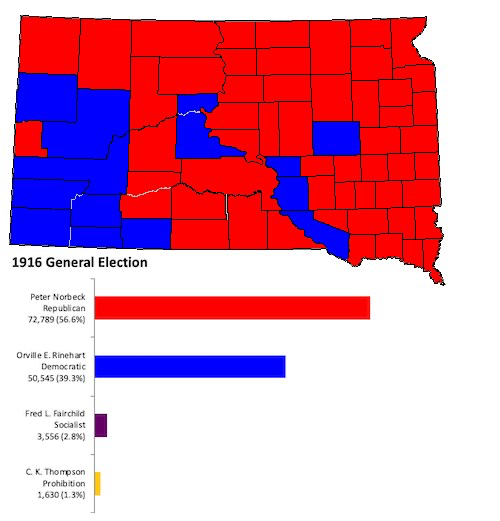
- Peter Norbeck was the lieutenant governor, and a Redfield well-driller and former state senator.
- Orville E. Rinehart was a Rapid City attorney and state representative.
- Fred L. Fairchild was a Haakon County rancher.
- C. K. Thompson was a Spink County resident; he had run previously in 1914.
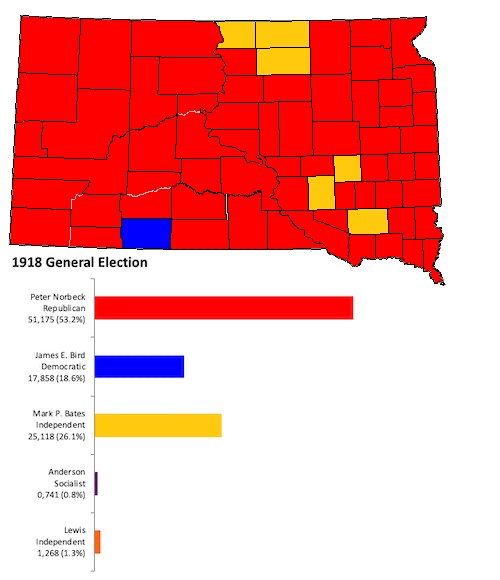
- Peter Norbeck was the incumbent governor, seeking reelection.
- James E. Bird was a Watertown businessman who served on the Codington County draft board.
- Mark P. Bates was a Sanborn County farmer, backed by the Nonpartisan League. He ran again in 1920.
- Orville S. Anderson was a Haakon County rancher. Shortly before the general election, Anderson was convicted of violating the federal Espionage Act of 1917, which had been passed after U.S. entry into the First World War, after being charged with “seditious talk” and attempting to obstruct the draft.

- William H. McMaster was the lieutenant governor and a Yankton banker and former state legislator.
- William W. Howes was a Wolsey attorney and former state senator.
- Mark P. Bates was a Sanborn County farmer; he had also run for governor in 1918.
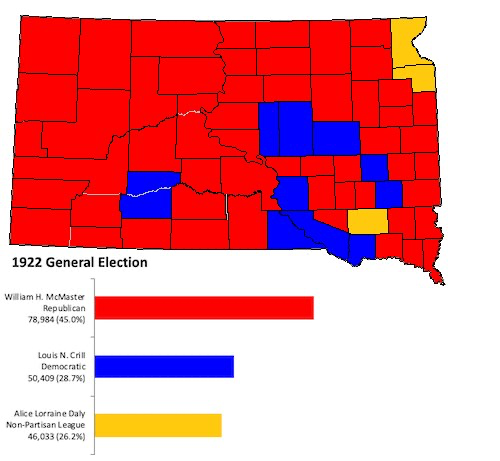
- William H. McMaster was the incumbent governor, seeking reelection.
- Louis Napoleon Crill was an Elk Point banker, State Democratic Party chairman, and former state senator and president pro tempore. He had also been the Democratic nominee for governor in 1904, and would serve in the Bulow administration as commissioner of agriculture.
- Alice Lorraine Daly was a Mitchell suffragist, chair of the South Dakota Women in Industry Committee, and former head of the department of public speaking at Madison Normal School. Daly was the first woman to be a candidate for Governor of South Dakota.
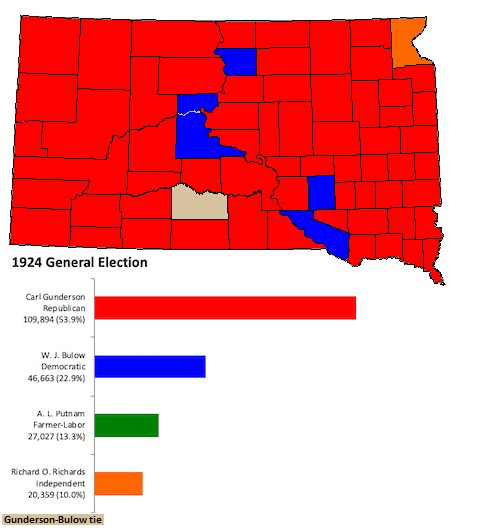
- Carl Gunderson was lieutenant governor and a former state senator and president pro tempore. He had been federal allotting agent for the Rosebud Reservation and was a surveyor.
- William J. Bulow was a Beresford attorney and former mayor and state senator. The Democratic nominee had been Andrew S. Anderson, a Beresford farmer and state senator. Anderson was trampled to death by a bull three months before the general election, and the Democratic state central committee nominated Bulow is his place. Bulow ran again in 1926, winning his first of two terms as governor.
- A. L. Putnam was a Timber Lake farmer and rancher, and a former minister.
- Richard O. Richards was a Huron businessman and progressive reformer who had previously run in 1914, 1916, and 1920, and would run again in 1926.

- William J. Bulow was Beresford attorney and former mayor and state senator who had previously run in 1924. He was the first Democrat to be elected governor.
- Carl Gunderson was the incumbent governor, seeking reelection. He was the first incumbent governor to lose a bid for a second term in the general election.
- Tom Ayres was an Aberdeen newspaper publisher. He had been the 1920 Nonpartisan League candidate for U.S. Senate, and ran for the Republican nomination for governor in 1932.
- John E. Tipple was the mayor of Pierre, publisher of the Capital Journal, and a former state auditor.
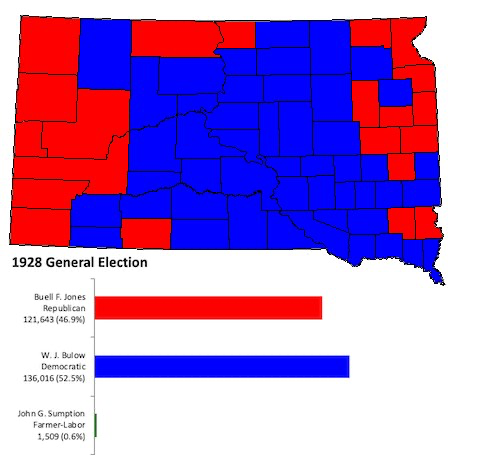
- William J. Bulow was the incumbent governor, seeking reelection.
- Buell F. Jones was the attorney general and a native of Britton.
- John G. Sumption was a farmer from near Frederick.
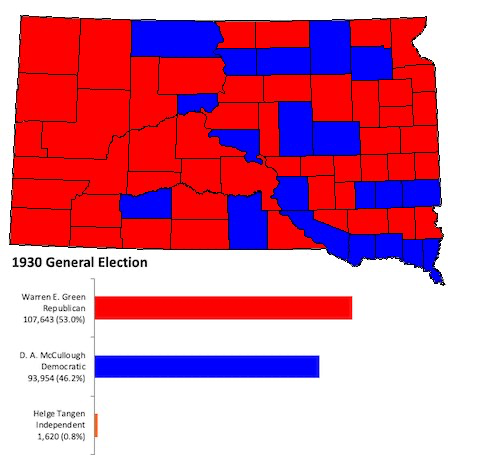
- Warren E. Green was a Hazel farmer and former state senator and member of the Board of Charities and Corrections. He had finished in last place among five candidates in the Republican primary with 7.4% of the vote, but was nominated at the State Republican Convention on the 13th ballot as a compromise after the other candidates coalesced against Secretary of State Gladys Pyle, who had won the most votes in the primary.
- David A. McCullough was a Sioux Falls native and the Rural Credits commissioner in the Bulow administration.
- Helge Tangen was a Frederick farmer and former leader of the Farmer-Labor Party; he ran for governor again in 1932.
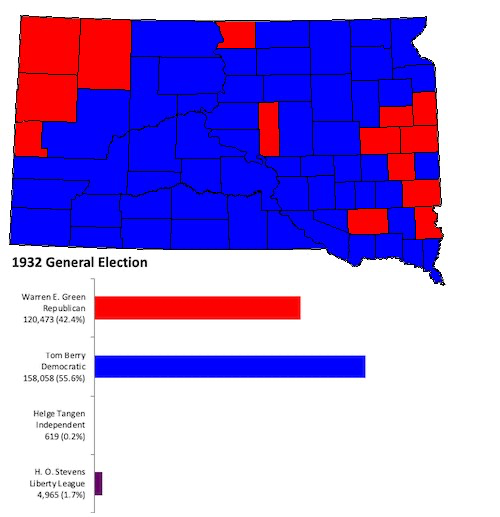
- Tom Berry was a Mellette County rancher and former state senator and member of the Custer State Park Board.
- Warren E. Green was the incumbent governor, seeking reelection.
- H. Oscar Stevens was a Presbyterian minister from Philip who advocated for radical economic reform.
- Helge Tangen was a Frederick farmer and former leader of the Farmer-Labor Party; he had also run for governor in 1930.
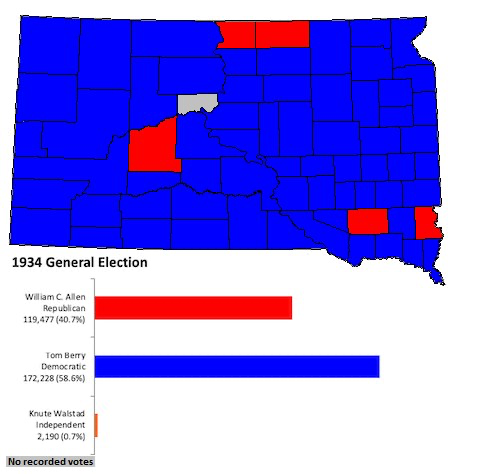
- Tom Berry was the incumbent governor, seeking a second term.
- William C. Allen was a resident of Aberdeen and the publisher of Dakota Farmer magazine.
- Knute Walstad was a Sisseton farmer, backed by the Communist Party of the United States.
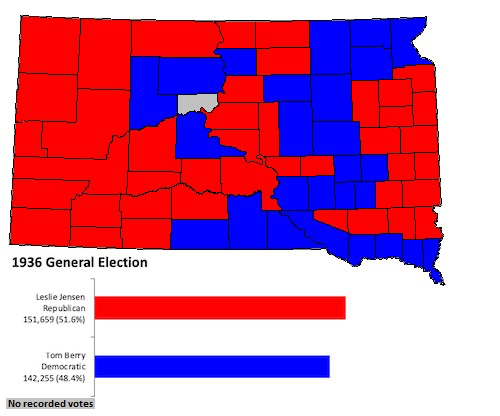
- Leslie Jensen was the owner of the Hot Springs telephone company and an attorney who had been federal Collector of Internal Revenue for South Dakota.
- Tom Berry was the incumbent governor, seeking what would have been an unprecedented third term.
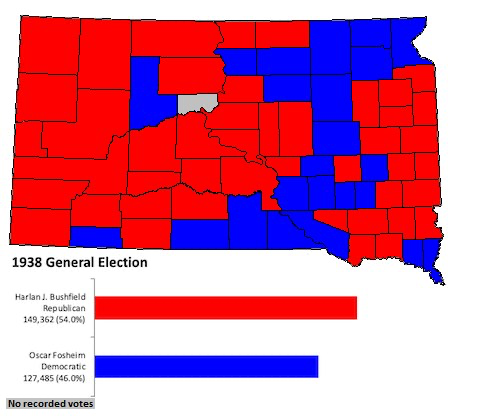
- Harlan J. Bushfield was a Miller attorney and chairman of the South Dakota Republican Party; he ran after Governor Leslie Jensen forewent a second term to run for the U.S. Senate.
- Oscar Fosheim was a state representative and farmer from Howard.
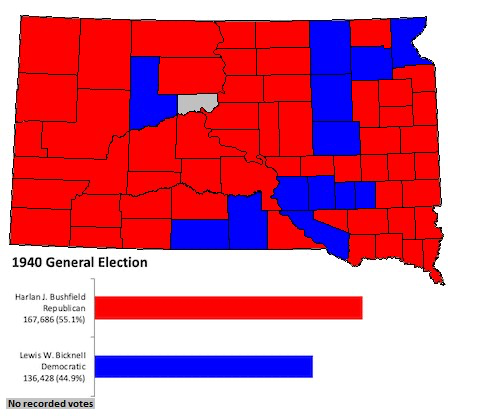
- Harlan J. Bushfield was the incumbent governor, seeking reelection.
- Lewis N. Bicknell was a Webster attorney and Democratic Party official. He had been the Democratic nominee for attorney general in 1914 and for U.S. House from the Second District in 1920, and was once again the Democratic nominee for governor in 1942.
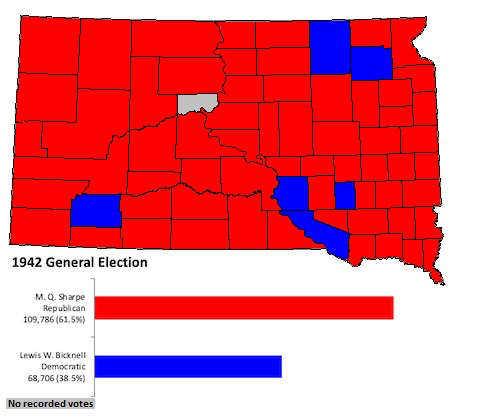
- M. Q. Sharpe was a Kennebec attorney and former attorney general. He had finished a close second in the Republican primary to Joseph H. Bottum, who had been director of taxation in the Bushfield administration. Sharpe won the nomination on the third ballot at the State Republican Convention.
- Lewis N. Bicknell was a Webster attorney and Democratic Party official who had also been the Democratic nominee for governor in 1940.
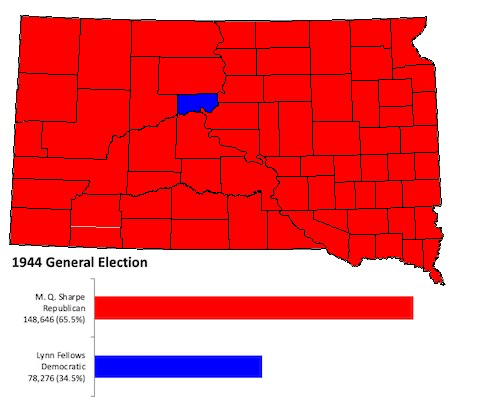
- M. Q. Sharpe was the incumbent governor, seeking reelection.
- Lynn Fellows was a Plankinton attorney and a former state representative who had run for attorney general in 1942.
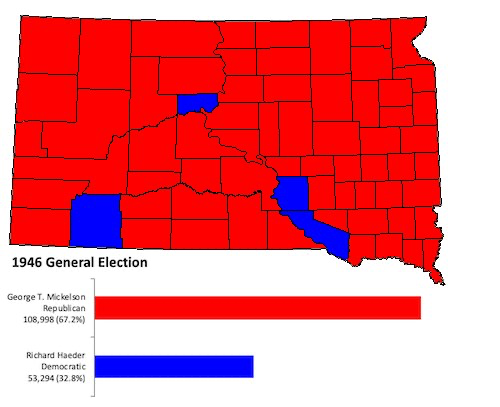
- George T. Mickelson was the attorney general. A Selby attorney, he had served in the State House as speaker and appropriations chairman. Mickelson defeated Governor Sharpe, who was seeking a third term, in the Republican primary.
- Richard Haeder was a Wolsey farmer and president of the South Dakota Rural Electrification Association.
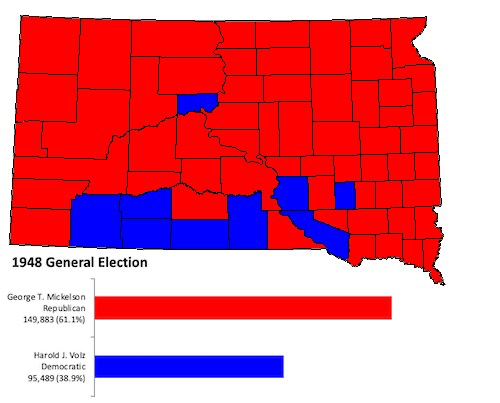
- George T. Mickelson was the incumbent governor, seeking a second term.
- Harold J. Volz was a Winner abstract company owner.

- Sigurd Anderson was a Webster attorney and the attorney general.
- Joe Robbie was a Mitchell attorney and chairman of the South Dakota Democratic Party. Following his loss, he would relocate to Minneapolis and eventually become the founding owner of the Miami Dolphins.
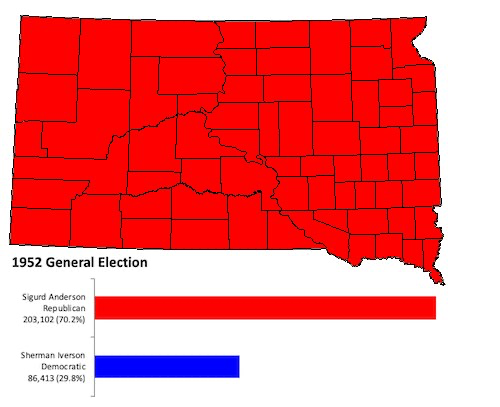
- Sigurd Anderson was the incumbent governor, seeking reelection.
- Sherman Iverson was a Minnehaha County farmer and the mayor of South Sioux Falls, a separately incorporated city until it was consolidated into the City of Sioux Falls in 1955.
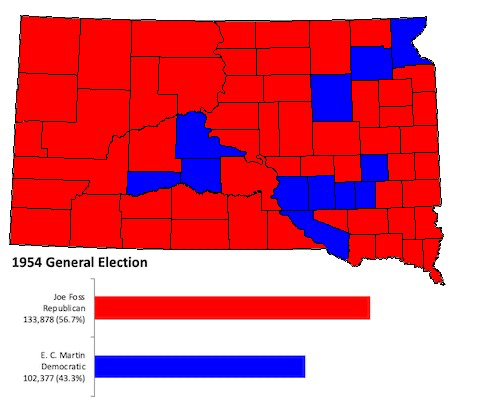
- Joe Foss was a Sioux Falls businessman, aviator, and state representative who had received the Congressional Medal of Honor for his heroics as a naval aviator during World War II. Foss had run for governor in 1950, narrowly losing the Republican primary to Sigurd Anderson.
- Ed C. Martin was a rancher and former Buffalo County Commissioner.
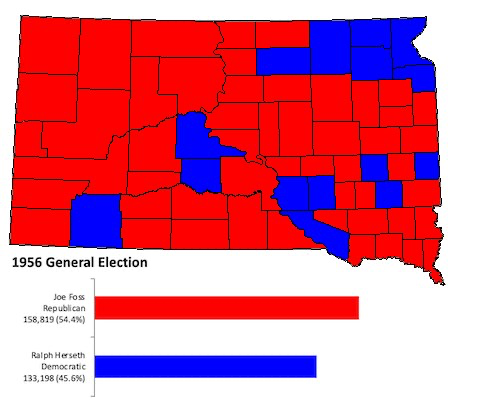
- Joe Foss was the incumbent governor, seeking reelection.
- Ralph Herseth was a Houghton farmer and the senate minority leader. He was elected to succeed Foss in 1958.
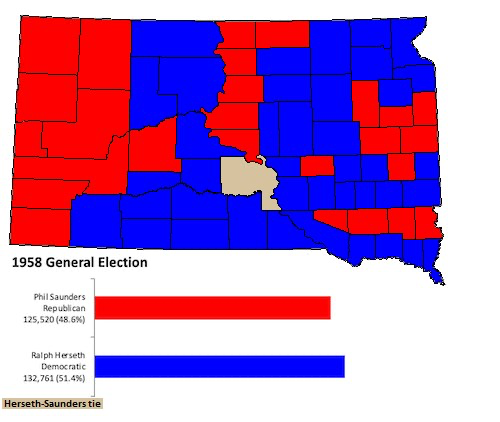
- Ralph Herseth was a Houghton farmer and the former senate minority leader. He had been the Democratic nominee in 1956, losing to Governor Foss.
- Phil Saunders was the attorney general and a Milbank native. He had previously served as administrative assistant to Governor Anderson.
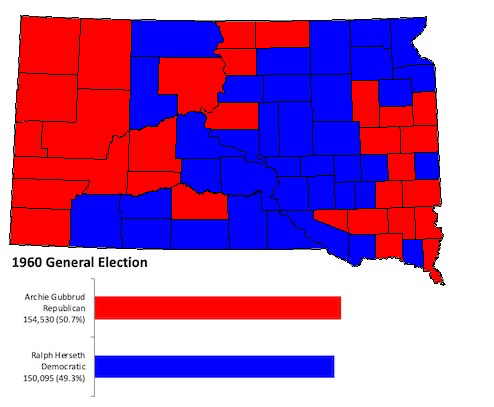
- Archie Gubbrud was a Lincoln County farmer and a state representative who had served as speaker and as majority leader. Gubbrud’s victory was the third-narrowest in state history, exceeded only by Governor Lee’s wins in 1896 and 1898.
- Ralph Herseth was the incumbent governor, seeking a second term. He would attempt a comeback in 1962.
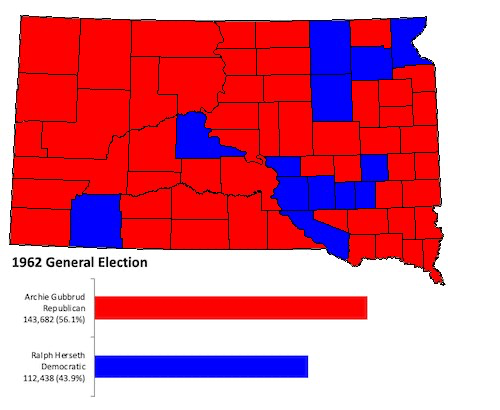
- Archie Gubbrud was the incumbent governor, seeking reelection.
- Ralph Herseth was a former governor and the Democratic nominee for the fourth consecutive time, a record in South Dakota history. He had lost in 1958, won in 1960, and lost in 1962.
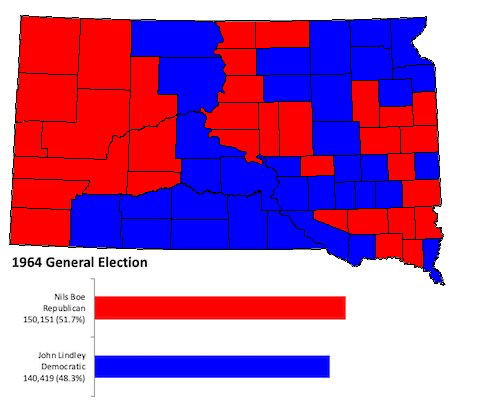
- Nils Boe was a Sioux Falls attorney and the lieutenant governor, and a former house speaker.
- John Lindley had been lieutenant governor in the Herseth administration; he was a Chamberlain attorney and former state representative.
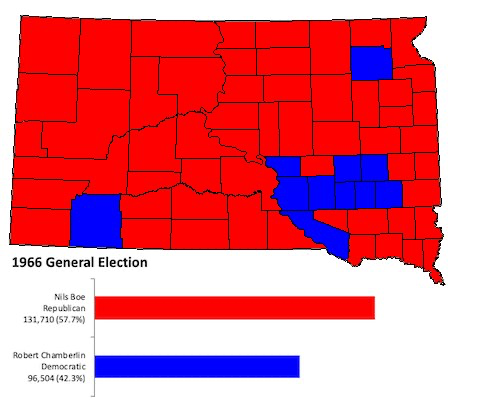
- Nils Boe was the incumbent governor, seeking reelection.
- Robert Chamberlin was a Hecla farmer who had served in the State House as minority leader, and had been the Democratic nominee for lieutenant governor in 1964. He would once again be the Democratic nominee for governor in 1968.

- Frank Farrar was a Britton attorney and the youngest attorney general in South Dakota history.
- Robert Chamberlin was a Hecla farmer who had served in the State House as minority leader, and was chairman of the South Dakota Democratic Party. He had also been the party’s nominee for governor in 1966.
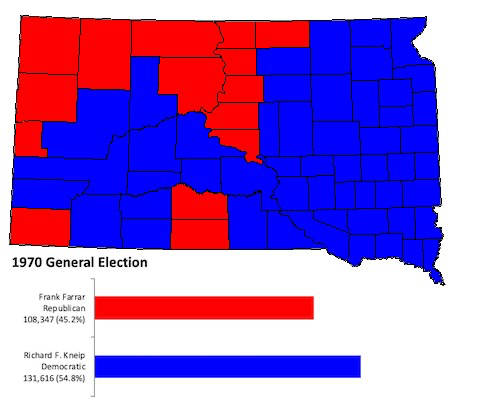
- Richard F. Kneip was a Salem dairy equipment salesman and the senate minority leader.
- Frank Farrar was the incumbent governor, seeking a second term.
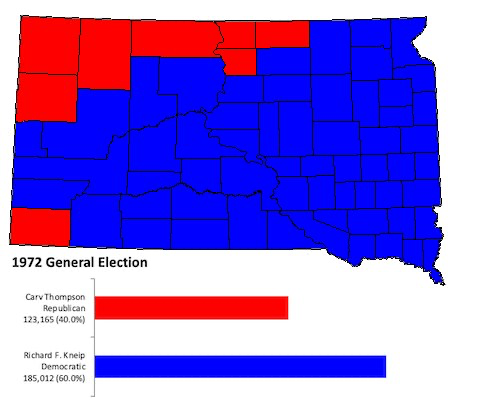
- Richard F. Kneip was the incumbent governor, seeking reelection.
- Carv Thompson was a state representative and pharmacist from Faith.
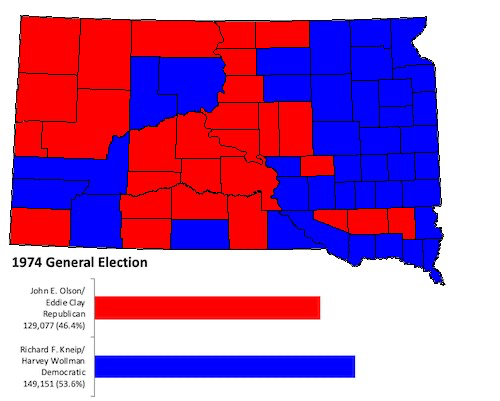
- Richard F. Kneip / Harvey Wollman. Kneip was the incumbent governor. Although governors were subject to a two-term limit, the South Dakota Supreme Court ruled that a new executive article passed in 1972, which changed the gubernatorial term from two years to four years, entitled Kneip to run for two four-year terms to follow his two two-year terms. The new article also provided for the governor and lieutenant governor to run as a ticket; Kneip’s running mate was Wollman, a Spink County farmer and the senate majority leader.
- John E. Olson / Eddie Clay. Olson was a Sioux Falls businessman who had served as state highway director in the Boe administration and as manager of the South Dakota Rural Electric Association. Clay was the assistant house majority leader and a Hot Springs businessman.
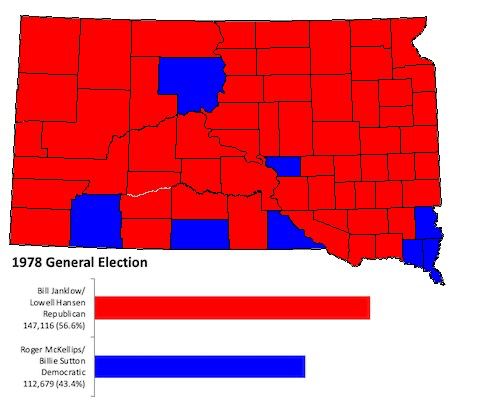
- Bill Janklow / Lowell Hansen. Janklow, a native of Flandreau, was the attorney general. Hansen was the speaker of the house and a Sioux Falls businessman.
- Roger McKellips / Billie Sutton. McKellips was a state senator and Alcester banker. He had defeated Lt. Governor Harvey Wollman in the Democratic primary, shortly before Wollman succeeded to the governorship due to Governor Kneip’s resignation to become U.S. Ambassador to Singapore. Sutton was a state senator and rancher from Bonesteel; his grandson of the same name was the Democratic nominee for governor in 2018.
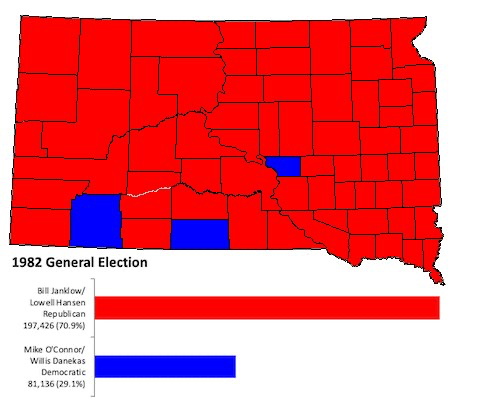
- Bill Janklow / Lowell Hansen. Janklow and Hansen were the incumbents seeking reelection. Janklow’s 70.9% is the largest percentage of the vote for a gubernatorial candidate in state history. Janklow ran for governor again 1994.
- Michael O’Connor / Willis Danekas. O’Connor was a former state senator and president pro tempore from Brandon and the owner of a Sioux Falls printing business. Danekas was a farmer from Clark County.
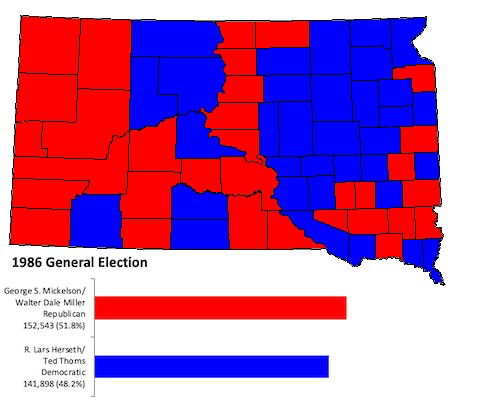
- George S. Mickelson / Walter Dale Miller. Mickelson, a Brookings attorney, was a former house speaker and the son of Governor George T. Mickelson. Miller was a Meade County rancher and a longtime state representative who had served as house speaker and as majority leader.
- R. Lars Herseth / Ted Thoms. Herseth, a Houghton farmer, was the house minority leader and son of Governor Ralph Herseth. Thoms, a Sioux Falls developer, was a Minnehaha County commissioner.
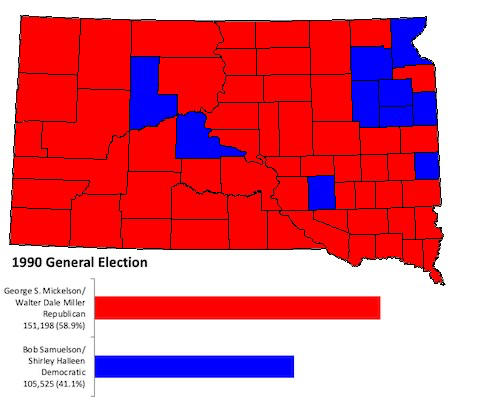
- George S. Mickelson / Walter Dale Miller. Mickelson and Miller were the incumbents seeking reelection.
- Bob Samuelson / Shirley Halleen. Samuelson was a Faith rancher and the assistant senate minority leader; he was a former chairman of the State Democratic Party and had been the party’s nominee for U.S. House from the Second District in 1978. Halleen was a former state representative from Sioux Falls who had been the Democratic nominee for Secretary of State in 1978. She was the first woman to appear on a major party’s gubernatorial ticket.
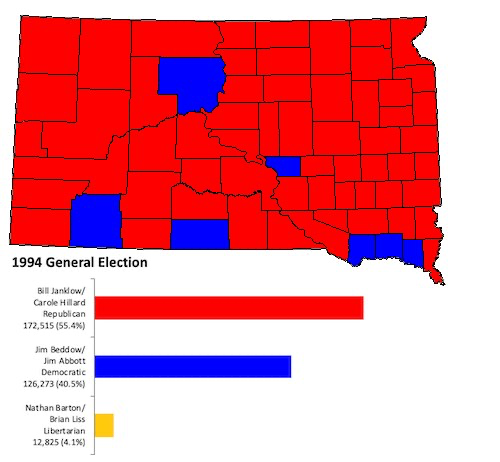
- Bill Janklow / Carole Hillard. Janklow was the first former governor to successfully seek a return to the office. He won the Republican primary against Governor Walter Dale Miller, who had succeeded to the office after Governor Mickelson died in the April 19, 1993 crash of the state plane. Hillard was a state representative and former councilwoman from Rapid City. She was the first woman to appear on a Republican gubernatorial ticket, and the first woman to be elected lieutenant governor.
- Jim Beddow / Jim Abbott. Beddow was the president of Dakota Wesleyan University and a professor. His wife, Jean, had been a state representative from Mitchell. Abbott was a Yankton businessman and former state representative; he later became president of the University of South Dakota and was the Democratic nominee for governor in 2002.
- Nathan Barton / Brian Liss. Barton was an engineer from Rapid City; he ran again in 2002. List would later serve one term in the State House from Sioux Falls, as a Republican.
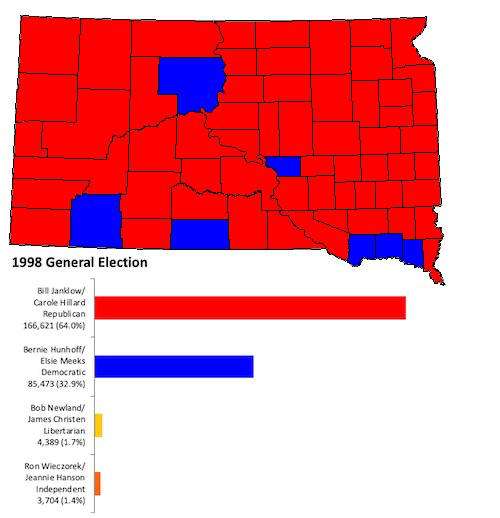
- Bill Janklow / Carole Hillard. The incumbents, seeking reelection.
- Bernie Hunhoff / Elsie Meeks. Hunhoff was the senate minority leader from Yankton and the owner and publisher of South Dakota Magazine. Meeks, and Interior businesswoman and economic development official, was the first tribal member to appear on a major party’s gubernatorial ticket.
- Bob Newland / James Christen. Newland was a Belle Fourche writer and marijuana legalization activist.
- Ron Wieczorek / Jeannie Hanson. A Mount Vernon farmer and former Democrat, Wieczorek was a follower of activist Lyndon LaRouche.
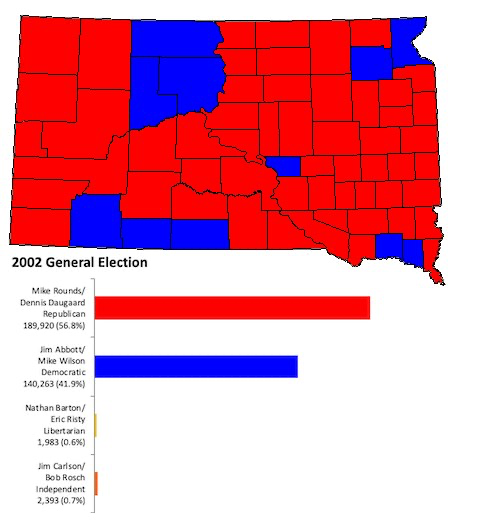
- Mike Rounds / Dennis Daugaard. Rounds was a Pierre businessman and former senate majority leader. He won the nomination in a major upset against the two frontrunners, Attorney General Mark Barnett and former Lt. Governor Steve Kirby. Daugaard was a Dell Rapids state senator, attorney, and executive at Children’s Home Society of South Dakota.
- Jim Abbott / Mike Wilson. Abbott was the president of the University of South Dakota and a former state representative and businessman from Yankton; he had been the Democratic nominee for lieutenant governor in 1994 and had run for U.S. House in 1996. Wilson was a Rapid City attorney and former state representative. Following his defeat, Abbott returned to the USD presidency until his retirement in 2018.
- Nathan Barton / Eric Risty. Barton, a Rapid City engineer, had also run for governor in 1994.
- James Carlson / Robert Rosch. Carlson was a Sioux Falls resident.
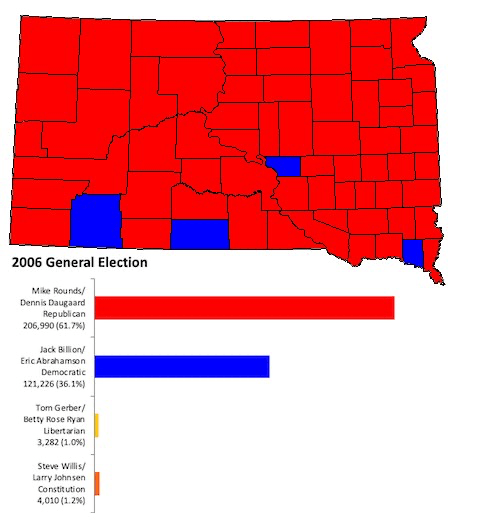
- Mike Rounds / Dennis Daugaard. The incumbents, seeking reelection.
- Jack Billion / Eric Abrahamson. Billion was an orthopedic surgeon and former state representative from Sioux Falls. Abrahamson was a Rapid City historian and school board member.
- Tom Gerber / Betty Rose Ryan. Gerber was a retired technology consultant from Sturgis.
- Steve Willis / Larry Johnsen. Willis was a businessman in Sioux Falls.
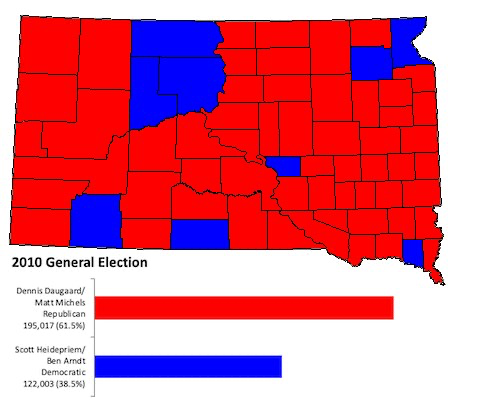
- Dennis Daugaard / Matt Michels. Daugaard was the lieutenant governor and a former state senator from Dell Rapids. An attorney, he was executive director of Children’s Home Society of South Dakota. Michels was a Yankton attorney and former house speaker.
- Scott Heidepriem / Ben Arndt. Heidepriem was a Sioux Falls attorney and the senate minority leader; he had previously represented Miller in the State House as a Republican, and sought the Republican nomination for U.S. House in 1986. Arndt, also a former Republican, was a Sioux Falls businessman.
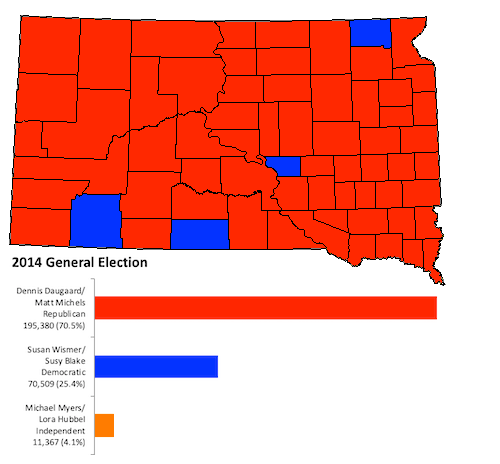
- Dennis Daugaard / Matt Michels. The incumbents, seeking reelection. Daugaard’s margins of 124,928 votes and 45.0% are both the largest margins of victory by a gubernatorial candidate in state history.
- Susan Wismer / Susy Blake. Wismer was a state representative and accountant from Britton. Blake was nurse and former state representative from Sioux Falls. Wismer was the first woman to be nominated by a major party for governor, and the Wismer/Blake ticket was the fourth all-female gubernatorial ticket in U.S. history.
- Michael Myers / Lora Hubbel. Myers was a retired law professor and health care executive from Vermillion. Hubbel was a right-wing activist and former state representative from Sioux Falls; she had lost the Republican primary to Daugaard.
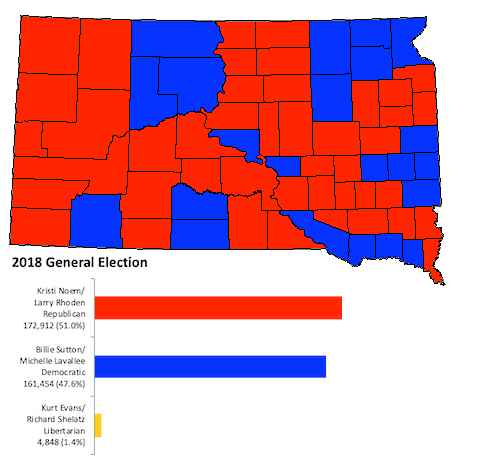
- Kristi Noem / Larry Rhoden. Noem, the incumbent congresswoman, was a farmer, rancher, and businesswoman from Hamlin County, and a former state representative. Rhoden, a Union County rancher, was a state representative and former majority leader. Noem was the first woman to win the Republican nomination for governor, and the state’s first female governor.
- Billie Sutton / Michelle Lavallee. Sutton was the senate minority leader and a financial advisor and rancher from Burke. He had been paralyzed below the waist after a rodeo accident. Lavallee was a Sioux Falls marketing consultant and a former Republican.
- Kurt Evans / Richard Shelatz. Evans was a teacher and musician from Wessington Springs; he had run for U.S. House in 1996, for U.S. Senate in 2002, and for state auditor in 2014.
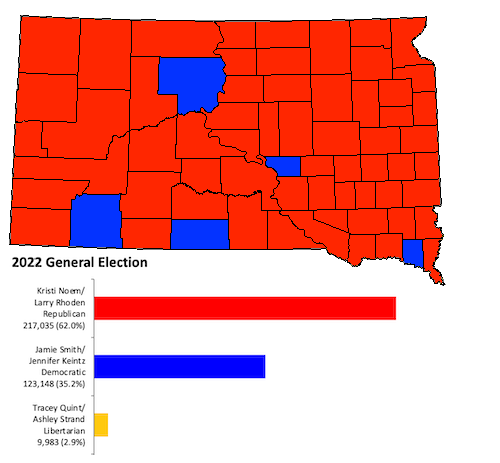
- Kristi Noem / Larry Rhoden. The incumbents, seeking reelection. Noem’s 217,035 votes are the most ever won by a candidate for governor.
- Jamie Smith / Jennifer Keintz. Smith was the house minority leader, and a real estate agent and former teacher from Sioux Falls. Keintz was a real estate broker and state representative from Eden.
- Tracy Quint / Ashley Strand. Quint worked in the non-profit sector in Sioux Falls.
 SoDak Governors