
The 2026 Republican gubernatorial primary has brought renewed attention to South Dakota’s runoff law. Four candidates are competing for the Republican nomination, bringing about the possibility that no candidate will achieve the 35 percent threshold that is required to win the June 2 primary outright. If that happens, a runoff between the top two candidates will be held eight weeks later, on July 28.
Prior to 1985, candidates for Governor, U.S. Senate, and U.S. House were required to win 35 percent to secure the nomination – but if no candidate met this threshold, the delegates to the party’s state convention chose a nominee from among the primary candidates.
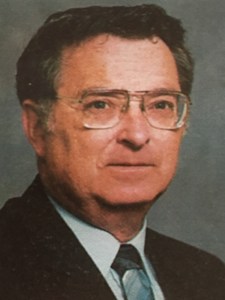
Legislation to switch from the convention to a state runoff was proposed in 1985 by House Majority Leader Joe Barnett. Barnett, an Aberdeen attorney and former house speaker, remains a legend of the South Dakota State Legislature even today. He proposed this change with a wide-open 1986 primary season looming.
At the time, five Republicans were considering candidacies for governor: Former Congressman Clint Roberts, Lt. Governor Lowell Hansen, former House Speaker George S. Mickelson, Secretary of State Alice Kundert, and Attorney General Mark Meierhenry. Ultimately, all but Meierhenry would run. Likewise, a crowded field of Republicans was considering a bid for U.S. House, with the expectation that incumbent Congressman Tom Daschle, a Democrat, would run for the U.S. Senate.
News coverage from the 1985 session indicates that Mickelson and Kundert were in favor of the change to a runoff, while Roberts was opposed. Barnett was accused of proposing the change to aid the Mickelson campaign, but he denied that his proposal was in support of any particular candidate. Rather, Barnett argued that the voters, rather than “brokered conventions,” should select party nominees.
Barnett’s legislation passed, but he sadly did not live to see it take effect. Barnett died of a heart attack on May 1, 1985, aged only 53.
The runoff law was in effect for the first time in the 1986 primaries, a year that included nearly every notable political figure of the era competing for U.S. Senate, U.S. House, or Governor. George S. Mickelson secured the Republican gubernatorial nomination in the primary, winning 35.3 percent and avoiding a runoff with Clint Roberts by just 345 votes. Dale Bell won the four-candidate Republican primary for U.S. House by a wider margin, winning 46% against state legislators Scott Heidepriem, Ron Volesky, and Don Frankenfeld.
In the 40 years since the runoff law was enacted, South Dakota has never held a runoff for U.S. Senate, U.S. House, or Governor. Mickelson’s win in the 1986 Republican gubernatorial primary is the closest that any primary has come to requiring a runoff.
Barnett’s original legislation provided for a runoff to be held just two weeks after the primary election. This has been changed a few times by subsequent legislation. In 2008, legislation proposed by Secretary of State Chris Nelson extended that to three weeks. In 2013, legislation proposed by Rep. Chip Campbell and Sen. Mark Kirkeby extended this to ten weeks, responding to concerns from Secretary of State Jason Gant about a federal law that requires forty-five dates for members of the military to vote. In 2023, a bill sponsored by Rep. Tony Venhuizen and Sen. Jim Bolin shortened this to the current eight weeks.
A runoff is mathematically possible but extremely unlikely in a three-candidate race, as it would require the three candidates to be nearly tied with approximately one-third of the vote each. It is far more likely if there are four or more candidates. A primary field of that size is unusual in South Dakota. Since 1985, it has happened eight times; in each case, a candidate secured the nomination with more than 35 percent in the primary:
- 1986 Republican Gubernatorial Primary: As mentioned above, George S. Mickelson prevailed with 35.3% against Clint Roberts, Lowell Hansen, and Alice Kundert, and prevailed in the general election against Democrat Lars Herseth.
- 1986 Republican U.S. House Primary: As mentioned above, Dale Bell prevailed with 46%. He was defeated that fall by Democrat Tim Johnson.
- 1996 Democratic U.S. House Primary: Rick Weiland won the nomination with 42% against Jim Abbott, Linda Stensland, and Dennis Jones. He lost the general election to Republican John Thune.
- 2002 Democratic Gubernatorial Primary: Jim Abbott won with 69% against Jim Hutmacher, Ron Volesky, and Robert Hockett. Abbott lost the fall election to Republican Mike Rounds.
- 2002 Republican U.S. House Primary: Governor Bill Janklow prevailed with 55% in a five-candidate field that also included former U.S. Senator Larry Pressler, Roger Hunt, Tim Amdahl, and Bert Tollefson.
- 2002 Democratic U.S. House Primary: Stephanie Herseth won with 58% against Rick Weiland, Denny Pierson, and Dick Casey. Janklow defeated Herseth in the general election.
- 2010 Republican Gubernatorial Primary: Dennis Daugaard prevailed with 50% against Scott Munsterman, Dave Knudson, Gordon Howie, and Ken Knuppe. Daugaard defeated Democrat Scott Heidepriem in the fall campaign.
- 2026 Republican Gubernatorial Primary: This year’s primary includes Larry Rhoden, Dusty Johnson, Jon Hansen, and Toby Doeden.
There were six instances prior to 1985 when a primary failed to produce a 35-percent winner and the nomination was settled at the state party convention:
- 1930 Republican Gubernatorial Primary: Secretary of State Gladys Pyle finished first in the primary with 28 percent, ahead of former Governor Carl Gunderson, Brooke Howell, Carl Trygstad, and Warren E. Green. The state convention voted twelve times before it rallied around Green, who had finished last in the primary with 7 percent, as a compromise, and he was elected the state’s 13th governor. Pyle would have been the first woman in the United States to be elected governor without being the wife or widow of a former governor; that milestone would not be reached until 1974. She also would have been the first female Governor of South Dakota, 78 years before the state elected Kristi Noem. Pyle went on to briefly serve in the U.S. Senate.
- 1934 Republican U.S. House Second District Primary: Former Congressman William Williamson finished first with 30 percent in a four-way primary for South Dakota’s second district, which was West River. The other candidates were Dan McCutchen, Francis Case, and E. N. Hammerquist. Case, despite having finished third in the primary with 25 percent, was nominated by the state convention on the third ballot. He lost the general election to incumbent Democrat Theodore B. Werner, but defeated Werner in 1936, launching a career in Congress that lasted until his death, as a U.S. Senator, in 1962.
- 1942 Republican Gubernatorial Primary: The primary was nearly a four-way split with Joe Bottum finishing first with 29 percent, followed by M.Q. Sharpe with 26 percent, Leo Temmey with 25 percent, and Millard Scott with 21 percent. At the state convention, Sharpe led on the first ballot and prevailed on the third. He was elected governor that fall and was reelected in 1944.
- 1948 Republican U.S. House First District Primary: Harold Lovre nearly won the primary outright with 32 percent, finishing ahead of William Pringle, Art Anderson and E. L. Staving. Lovre was easily nominated by the state convention on the first ballot and was elected to represent the state’s eastern district that fall.
- 1958 Democratic U.S. House Second District Primary: Herb Thomas finished first in the six-candidate field, just 41 votes ahead of J. T. McCullen, in the primary to succeed George McGovern, who was running for U.S. Senate. Other candidates were Theodore B. Werner, Robert Burnette, Arlie N. Mahaffa, and George O. Crouch. The state convention nominated McCullen after a hard-fought battle against Thomas; he lost the general election to Republican Ben Reifel.
- 1972 Republican U.S. Senate Primary: In a five-way contest, Robert W. Hirsch finished first with 27 percent, ahead of Gordon Mydland with 22 percent, and Chuck Lien, Kenneth Stofferahn, and Tom Reardon following. Hirsch was nominated by the state convention, but lost the general election to Democrat Jim Abourezk. This would be the last time that a state convention was required to make a nomination prior to the 1985 runoff law’s passage.

